
Business
Sheila Page: A Comprehensive Look at the Two Distinguished Figures Sharing a Name


Introduction
The name “Sheila Page” occupies a fascinating and unexpected dual space in public consciousness, representing two women of considerable accomplishment whose lives took dramatically different paths. For one segment of the population, particularly those interested in Hollywood history and the lives of classic film personalities, the name evokes the memory of an actress, singer, and acting teacher who played a pivotal role in the early life of acclaimed actor Nick Nolte. For another audience entirely—those concerned with international development, economics, and global trade policy—Sheila Page is synonymous with rigorous academic scholarship, landmark publications on developing economies, and decades of influential research at prestigious institutions . This duality makes “Sheila Page” a remarkably rich subject for exploration, as each woman’s story offers profound insights into different arenas of twentieth-century life: the gritty, often unglamorous world of regional theatre and the demanding, intellectually rigorous sphere of development economics. Understanding both narratives not only satisfies curiosity about these two individuals but also illuminates broader themes of ambition, resilience, and the varied forms a life of purpose can take. This article will provide a comprehensive examination of both Sheila Pages, delving into their biographies, professional achievements, and the enduring legacies that continue to attract interest from diverse quarters, while also clarifying the distinctions between these two remarkable figures.
The first Sheila Page, often introduced as the first wife of actor Nick Nolte, was a working performer with genuine stage experience who contributed to the American theatre landscape in the 1960s and beyond . Her story is one of artistic dedication, personal support, and the often-overlooked labour that underpins the success of more famous individuals. She was an actress in her own right, appearing in films such as The Honeymoon Machine (1961) and The Shakiest Gun in the West (1968), and she also worked as a singer and acting teacher, with her reputation as an educator being a particularly enduring aspect of her legacy . The narrative of her meeting and marriage to a then-unknown Nick Nolte in the context of the Phoenix Little Theatre provides a compelling window into the world of regional theatre, a crucible where talent was forged and personal connections often carried as much weight as professional ambition . Her role in helping to stabilize and support Nolte during his early struggles is a recurring theme in discussions of her life, casting her as a grounding influence during a formative period in the actor’s career.
The second Sheila Page is a figure of substantial intellectual heft, a scholar whose work has significantly shaped the understanding of how developing countries interact with the global economic system. A researcher at the Overseas Development Institute (ODI) in London since 1982, with prior positions at the National Institute of Economic and Social Research and Queen Elizabeth House, Oxford, she has authored a considerable body of work, including 28 papers that have garnered 242 indexed citations . Her academic focus encompasses general economics, econometrics, finance, development, and political science, with recurrent topics including global trade, international development and aid, and World Trade Organization law . Her books, such as How Developing Countries Trade: The Institutional Constraints (1994), Trade, Finance and Developing Countries: Strategies and Constraints in the 1990s (1990), and edited volumes like Monetary Policy in Developing Countries (1993), are considered foundational texts in their fields . Her work is characterized by a rigorous, evidence-based approach, often featuring detailed case studies of specific nations, which has made her an essential reference point for policymakers and academics alike .
The Actress and Theatre Professional: Sheila Page in Hollywood and Beyond
Sheila Page, the actress, was born in March 1940 and her life and career were deeply intertwined with the American entertainment industry, yet her story is far removed from the glitz and glamour often associated with Hollywood . Instead, it is a narrative rooted in the demanding realities of regional theatre, the persistent pursuit of craft, and the complex dynamics of a marriage to a future star. Her entry into the world of performing arts was influenced by her father, Lenny Page, a master of ceremonies associated with the Glen Island Casino scene in New Rochelle, New York . This environment, famous for live entertainment and the bustling energy of the big band era, likely provided her with early exposure to the rhythms of show business, shaping her comfort with performers, audiences, and the fast-moving social world of entertainment. This upbringing instilled in her not just a familiarity with the industry but a practical understanding of the work required to sustain a career in the arts, a foundation that would serve her well in the years to come.
The most defining episode of her public life remains her marriage to Nick Nolte, a story that begins in the crucible of the Phoenix Little Theatre, a regional theatre where many young actors honed their skills. Their meeting occurred during a production of The Miracle Worker, a demanding play that tells the story of Helen Keller and her teacher, Annie Sullivan . In a piece of casting that has become a cherished anecdote among fans and biographers, Sheila Page played the role of Annie Sullivan, the determined teacher, while Nolte played James Keller, Helen’s father . The play’s intense emotional and physical demands would have required a high degree of trust and collaboration between the actors, creating a perfect environment for a deep personal and professional bond to form. This setting was far removed from the superficial encounters of Hollywood casting calls; it was a place where actors learned to depend on one another, to share vulnerability, and to build performances from the ground up, a process that could forge powerful connections.
According to the available accounts, they married on November 28, 1966, and their marriage lasted approximately four years, ending in divorce in 1970 . While the timeline is somewhat consistent, sources occasionally cite 1971, a discrepancy that fuels continued online searches and reflects the minor ambiguities that can arise when documenting the lives of public figures from that era. What is more significant than the precise date of their divorce is the consensus about the nature of their relationship. She is frequently described as a stabilizing force in Nolte’s life, helping him navigate the chaotic early years of his career before he became a household name . Many accounts emphasize that she encouraged healthier routines and provided a structure and professional insight that helped him develop steadiness and focus when he was still finding his direction, grappling with the uncertainty and temptations that often accompany the pursuit of an acting career. This narrative frames her not merely as a wife but as a mentor and anchor, someone whose influence helped shape the professional discipline of one of Hollywood’s most enduring actors. Even after their divorce, reports suggest they remained on friendly terms, a testament to the maturity and mutual respect that existed between them .
Sheila Page‘s own professional identity extended beyond her marriage, encompassing film, television, and, most prominently, teaching. Her film credits include appearances in The Honeymoon Machine (1961), a comedic naval film starring Steve McQueen, and The Shakiest Gun in the West (1968), a comedy western starring Don Knotts, roles that, while not lead parts, placed her within the context of mainstream studio filmmaking . She is also associated with an appearance on The New Dick Van Dyke Show, a popular television series, which ties her to the recognizable mainstream titles of the era . However, the most distinctive and perhaps most influential part of her professional story is her reputation as an acting teacher. In the world of regional theatre, the best teachers are often working artists who possess a deep, practical understanding of timing, stage presence, vocal control, and emotional truth. They are the individuals who know how to build confidence in a performer who doubts their own ability, and Sheila Page is credited with playing that exact role for Nolte and likely many others . Her legacy, therefore, is not just a matter of film credits but of the lasting impact she had on students and peers, contributing to the artistic community in a way that is often undervalued in the celebrity-obsessed culture of Hollywood. Her story serves as a powerful reminder that the most profound influence can sometimes be found in the wings rather than in the spotlight, shaping the careers of those who would go on to become household names.
The Distinguished Economist: Sheila Page’s Academic and Policy Legacy
In stark contrast to the world of acting and theatre, the other Sheila Page has built a formidable legacy in the fields of economics, international development, and global trade policy. With a career spanning several decades, primarily at the Overseas Development Institute (ODI) in London, she has established herself as a leading scholar whose work provides rigorous, evidence-based analysis of the challenges and opportunities facing developing nations in the global economy . Her professional journey began with appointments at the National Institute of Economic and Social Research and Queen Elizabeth House, Oxford, before she joined the ODI in 1982 . This trajectory through some of the world’s most respected economic research institutions reflects a consistent dedication to understanding the mechanisms of global trade, the complexities of financial systems, and the intricate dance between national policy and international economic structures. Her work is characterized by a scholarly depth that combines theoretical frameworks with empirical case studies, making her a vital contributor to the academic and policy-making communities.
A detailed examination of the scholarly output bearing the name Sheila Page reveals a researcher focused on the intersection of developing economies, trade policy, and financial systems. Her authorship includes 28 papers that have received a total of 242 indexed citations, according to data from OpenAlex, placing her within a network of scholars based in both the United Kingdom and the United States . Her recurrent topics—global trade and economics, international development and aid, and World Trade Organization law—demonstrate a sustained commitment to understanding how developing countries can navigate the often-unforgiving landscape of international commerce . The network of citations to her work highlights the respect she commands in the field, with her scholarship forming a foundation for subsequent research. Her ability to synthesize complex data and present clear, actionable analysis has ensured that her work remains relevant and frequently referenced by other economists and policy experts.
Her books and edited volumes form a significant part of her professional legacy, representing years of research distilled into accessible, comprehensive texts. Her 1990 publication, Trade, Finance and Developing Countries: Strategies and Constraints in the 1990s, provides an analysis of the economic policies and financial landscapes of several developing nations, including case studies on Malaysia, Thailand, Colombia, Peru, and Zimbabwe . This work examines the interplay between commercial policy, finance, and economic development, establishing a framework for understanding the strategic options and inherent constraints faced by these nations. Similarly, her edited volume, Monetary Policy in Developing Countries (1993), based on studies done by the ODI and presented alongside parallel studies at a joint conference with Harvard Institute for International Development, delves into the complex issue of how countries with less sophisticated financial sectors can implement effective monetary policy as part of their adjustment programmes . This collection of studies analyzed the interaction between monetary policy, the financial sector, and development, offering invaluable insights into a topic that often assumes the advanced financial infrastructure of wealthy nations.
Perhaps her most significant work in terms of scope and depth is How Developing Countries Trade: The Institutional Constraints (1994), which examines the various barriers, both intentional and structural, that shape the trade policies of developing countries . This book includes detailed case studies of Malaysia, Thailand, Colombia, Zimbabwe, Mauritius, Jamaica, and Bangladesh, exploring a range of issues from tariffs and non-tariff barriers to countertrade and foreign investment . It provides a comprehensive view of the world trading system as seen from the perspective of developing countries, highlighting the institutional and structural constraints that often hamper their ability to benefit from global trade opportunities. Her work on regionalism, exemplified by the book Regionalism among Developing Countries (2000), was praised by scholarly reviewers for its extensive survey of regional groupings and its examination of the interdependence of regional groupings with global institutions . This body of work positions Sheila Page as a scholar whose research is not merely academic but is deeply concerned with the practical realities of economic development and the construction of a more equitable global economic order.
Conclusion
The name Sheila Page, therefore, serves as a remarkable case study in the complexities of public identity and the diverse forms that professional achievement can take. On one hand, there is the actress, singer, and teacher, a woman whose story is inextricably linked with the early life of a Hollywood icon, yet whose own contributions as a mentor and educator have left a lasting, if quieter, mark on the American theatre landscape . Her narrative is one of artistic dedication, personal resilience, and the behind-the-scenes work that supports the brightest stars, offering a humanizing counterpoint to the often-glamorised stories of celebrity success. Her ability to remain on good terms with a former spouse who would go on to achieve international fame speaks to her character and suggests a maturity that allowed her to navigate the emotional complexities of a high-profile relationship with grace. This Sheila Page’s legacy is found in the actors she taught, the productions she graced, and the stability she offered to a young performer finding his feet in a cutthroat industry.
On the other hand, the economist Sheila Page represents the power of intellectual pursuit to shape our understanding of the world and influence the policies that can improve the lives of millions in developing countries . Her extensive body of work, produced over decades at some of the world’s most prestigious research institutions, continues to be a vital resource for academics, policymakers, and students interested in trade, finance, and development. Her books and papers, with their rigorous scholarship and practical case studies, have provided a crucial framework for understanding the complex dynamics of global economics, and her voice has been a steady presence in academic journals and policy debates. This Sheila Page‘s legacy is measured in citations, in the influence of her ideas on policy, and in the clarity she has brought to some of the most challenging issues of our time. The fact that these two women, with their separate lives and distinct accomplishments, are united by a single name adds a layer of richness to both of their stories, ensuring that the name “Sheila Page” will continue to spark curiosity and demand a more detailed, nuanced exploration.
Frequently Asked Questions (FAQ)
1. Who is Sheila Page?
“Sheila Page” is the name of two highly accomplished individuals. One is a former actress, singer, and acting teacher known as the first wife of actor Nick Nolte, with credits including The Honeymoon Machine and The Shakiest Gun in the West . The other is a distinguished economist and scholar who has researched and published extensively on global trade, finance, and development economics, authoring works such as How Developing Countries Trade and Monetary Policy in Developing Countries .
2. What is Sheila Page (the actress) known for?
Sheila Page is best known for being the first wife of actor Nick Nolte and for her role as a stabilizing influence in his early career . They met at the Phoenix Little Theatre while performing in The Miracle Worker and married in 1966 . Beyond her marriage, she was a working actress and singer who appeared in films and television, and she was a respected acting teacher .
3. What are Sheila Page’s (the economist) main academic contributions?
The economist Sheila Page has made significant contributions to the fields of international development, trade policy, and finance. Her major works include How Developing Countries Trade: The Institutional Constraints (1994), Trade, Finance and Developing Countries: Strategies and Constraints in the 1990s (1990), and the edited volume Monetary Policy in Developing Countries (1993) . Her research is notable for its focus on the specific challenges and institutional constraints faced by developing nations in the global economy .
4. When did Sheila Page and Nick Nolte get married and divorce?
Sheila Page and Nick Nolte were married on November 28, 1966 . Their marriage is generally recorded as ending in 1970, though some sources suggest 1971 . Despite the divorce, reports indicate they remained on friendly terms .
5. Where did Sheila Page (the economist) work?
The economist Sheila Page worked for many years as a researcher at the Overseas Development Institute (ODI) in London . She began her career at the ODI in 1982 and prior to that held positions at the National Institute of Economic and Social Research and Queen Elizabeth House, Oxford . She was educated at Bryn Mawr College and the University of Cambridge .
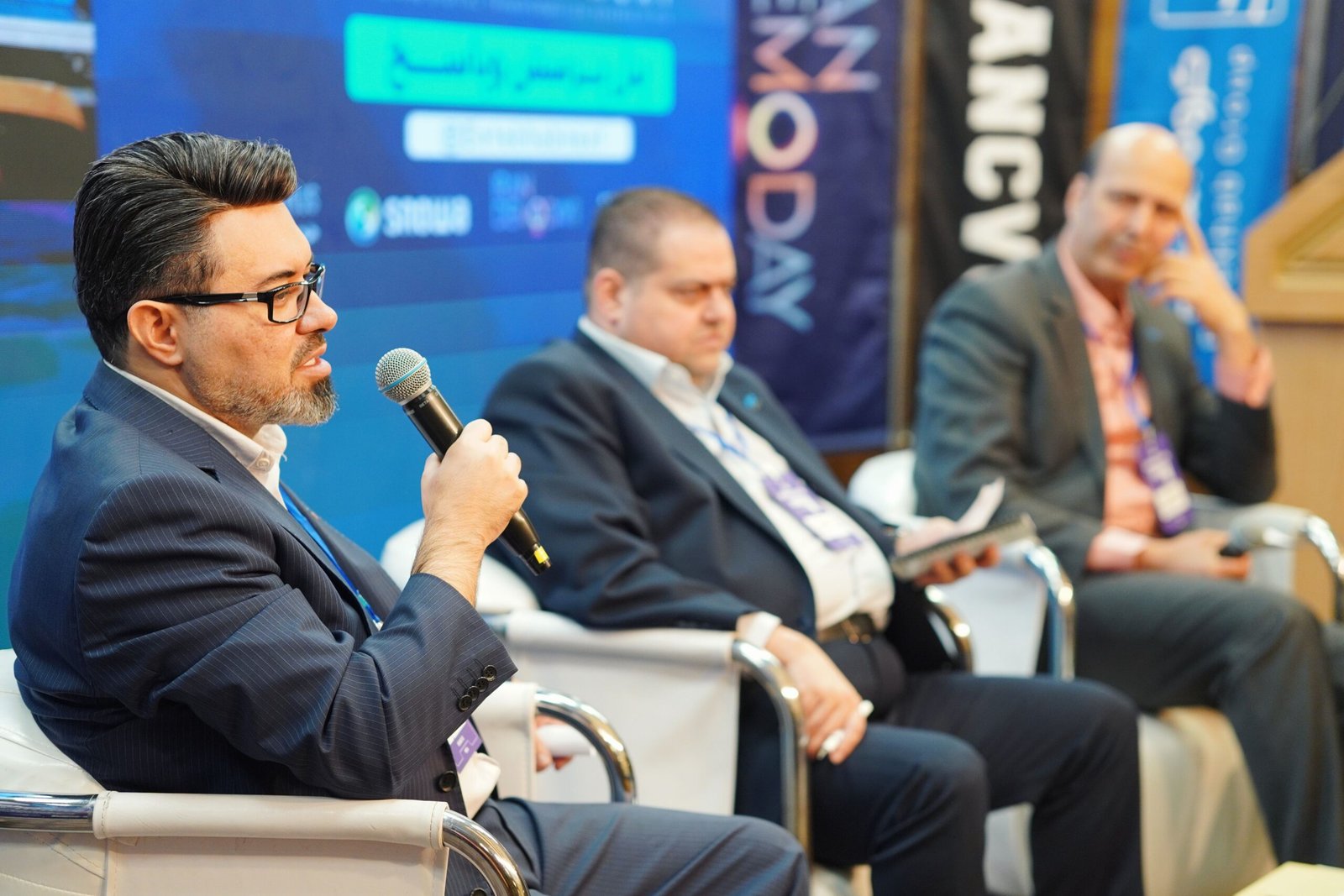
The Fappenung Forum is a discussion forum where people from different backgrounds can communicate, exchange ideas, ask questions, and participate in meaningful conversations. Online discussion forums continue to be valuable because they allow users to connect through shared interests, learn from one another, and build online communities. Whether someone wants advice, opinions, recommendations, or simply a place to chat, the Fappenung Forum aims to provide an accessible environment for general discussions.
Unlike niche communities that focus on a single topic, the Fappenung Forum encourages conversations across a wide variety of subjects. This makes it suitable for beginners, casual internet users, hobbyists, students, and anyone looking for an active online discussion space. As more users seek communities where they can freely interact and exchange ideas, forums remain one of the most reliable platforms for long-form conversations and organized discussions.
Best SEO Titles for Fappenung Forum
1. Fappenung Forum: The Complete Guide for New Users
Keyword: Fappenung Forum
2. What Is Fappenung Forum? Everything You Should Know
Keyword: What is Fappenung Forum
3. Fappenung Forum Features, Benefits, and Community Guide
Keyword: Fappenung Forum Features
4. Why People Join the Fappenung Forum for General Discussions
Keyword: Fappenung Forum Community
5. Fappenung Forum Explained: Topics, Membership, and User Experience
Keyword: Fappenung Forum Guide
What Is Fappenung Forum?
The Fappenung Forum is an online discussion platform where users can create conversations, reply to existing threads, and participate in community discussions. Forums have been popular for decades because they organize conversations into categories, making information easy to browse and search.
Members can visit the forum to ask questions, share experiences, discuss current events, provide recommendations, or simply interact with other users. The platform supports open communication while encouraging respectful participation among community members.
Main Purpose of Fappenung Forum
The primary purpose of the Fappenung Forum is to provide a space for general discussions. Instead of limiting conversations to one niche, the forum welcomes a broad range of topics, allowing users to discuss everyday life, hobbies, technology, entertainment, education, lifestyle, and many other subjects.
By offering an open discussion environment, the forum helps users connect with individuals who have similar interests while also introducing them to different viewpoints and ideas.
Features of Fappenung Forum
One of the biggest advantages of the Fappenung Forum is its organized discussion structure. Conversations are divided into categories and threads, making it easy for members to find topics that interest them. Users can browse discussions, search for existing answers, and contribute their own knowledge.
Additional features commonly associated with discussion forums include user profiles, discussion categories, search functionality, notifications, community moderation, and the ability to create new topics. These features improve navigation and encourage long-term participation.
Benefits of Joining Fappenung Forum
Participating in the Fappenung Forum offers several benefits. Users gain access to a community where they can ask questions, solve problems, exchange opinions, and learn from the experiences of others. The diversity of topics means there is usually something interesting for everyone.
Forums also help users improve communication skills, build online friendships, and discover new perspectives. Because discussions remain organized in threads, valuable information can often be found long after it was originally posted, making forums useful knowledge resources.
Popular Discussion Topics
Since the Fappenung Forum focuses on general discussions, users may find conversations covering numerous subjects, including:
- Technology and gadgets
- Entertainment and media
- Lifestyle and hobbies
- Education and learning
- Gaming
- Sports
- Travel
- Personal development
- Current events
- General questions and answers
This wide variety helps attract users with different interests and encourages active community participation.
Community Guidelines
A successful discussion forum depends on respectful communication. Members should treat others politely, avoid offensive language, stay on topic, and follow the forum’s rules. Constructive discussions create a positive environment where everyone feels comfortable sharing their opinions.
Reading existing discussions before creating new topics can also help reduce duplicate questions and improve the overall organization of the community.
Tips for New Members
New users should begin by exploring different discussion categories to understand the community. Completing a profile, introducing themselves when appropriate, and contributing thoughtful replies can help them become active members.
It is also helpful to search before asking a question, as another member may have already provided useful answers in an earlier discussion.
Why Discussion Forums Still Matter
Even with the popularity of social media platforms, discussion forums remain valuable because they organize information into searchable conversations. Instead of fast-moving posts disappearing in a timeline, forum discussions remain available for future visitors, making them excellent resources for learning and community interaction.
Forums encourage detailed conversations rather than short comments, allowing users to provide comprehensive answers and engage in meaningful exchanges.
Conclusion
The Fappenung Forum serves as a discussion forum designed for general users who want to participate in conversations on a wide range of topics. Its organized structure, community-focused environment, and flexibility make it suitable for anyone interested in asking questions, sharing experiences, and learning from others. Whether you are a first-time visitor or a regular participant, engaging respectfully and contributing valuable insights can help create a stronger and more welcoming online community.
Frequently Asked Questions (FAQs)
What is Fappenung Forum?
Fappenung Forum is a discussion forum where users participate in general discussions across multiple topics.
Who can join Fappenung Forum?
The forum is intended for general users interested in participating in online discussions.
What topics are discussed on Fappenung Forum?
Topics may include technology, entertainment, education, lifestyle, gaming, travel, sports, hobbies, and many other general subjects.
Is Fappenung Forum suitable for beginners?
Yes. Beginners can easily browse discussions, ask questions, and participate in community conversations.
Why are discussion forums still popular?
Discussion forums organize conversations into searchable threads, making information easier to find and preserving valuable discussions for future users.
How can users contribute positively?
Users can contribute by being respectful, sharing helpful information, following community guidelines, and participating in constructive discussions.



Alexee Trevizo: Biography, Case, Background, Timeline, and Latest Legal Updates

Goonies Cast: Complete Guide to The Goonies Cast and Characters

Gina Carano Biography: MMA Career, Movies, and Life Story

LogicalShout: The Ultimate Guide to Data-Driven Digital Marketing, Tech Insights & Proven Growth Strategies

Joanna Sturm: The Historian Who Preserved the Legacy of Alice Roosevelt Longworth

93.3 Contest: Your Ultimate Guide to Winning Big on the Radio
 Tech4 months ago
LogicalShout: The Ultimate Guide to Data-Driven Digital Marketing, Tech Insights & Proven Growth Strategies
- News4 months ago
Joanna Sturm: The Historian Who Preserved the Legacy of Alice Roosevelt Longworth
- Business4 months ago
93.3 Contest: Your Ultimate Guide to Winning Big on the Radio
- Tech4 months ago
Pasonet: The Digital Phenomenon Shaping Modern Connectivity, Business, and Culture
- Business3 months ago
Afdah Shut Down: Is It Safe and Legal in 2026? Top Legal Alternatives
- Fashion4 months ago
Literoticatags: Your Ultimate Guide to Navigating Erotic Literature with Precision and Pleasure
- Crypto3 months ago
BFS Coin Complete Guide 2026: Price, Legitimacy, Tokenomics & Future Outlook
- Business3 months ago
Wooflix: The Ultimate Guide to the Multi-Faceted Brand