
Connect with us

Tech

Hypakel: The Definitive Guide to Next-Generation Innovation

Published

on

hypakel

Introduction

In the rapidly evolving landscape of modern technology and materials science, new terms and products emerge with startling frequency, each promising to revolutionize its respective industry. One such term that has been gaining significant traction is Hypakel. But what exactly is Hypakel, and why is it generating so much interest across diverse sectors? The answer is that Hypakel is not a single entity but rather a term associated with a new generation of advanced materials and digital platforms that are setting new standards for performance, durability, and user experience. This article serves as the definitive guide to everything you need to know about Hypakel, exploring its various applications, groundbreaking properties, and the profound impact it is poised to have on the way we live and work. Whether you are a tech enthusiast, a medical professional, a DIY crafter, or simply curious about the future of innovation, understanding Hypakel is becoming increasingly essential.

Understanding Hypakel: A Multifaceted Innovation

The term “Hypakel” is used to describe several distinct yet equally revolutionary innovations that share a common thread of advanced engineering and user-centric design. On one hand, it refers to Hypak™, a remarkable packaging and crafting material renowned for its exceptional strength-to-weight ratio and versatility. Originating as a sophisticated medical packaging solution, Hypak™ material is a continuous filament product made from 100% virgin high-density polyethylene through flash spinning technology . This intricate manufacturing process creates an ultra-fine fiber network structure, endowing the material with physical properties that far surpass conventional packaging alternatives. It is tear-resistant, puncture-resistant, and fold-resistant, making it suitable for protecting even the most delicate and irregularly shaped medical devices . Furthermore, its unique structure provides an optimal balance between bacterial resistance and breathability, ensuring that sterilization gases can penetrate and be efficiently removed while maintaining a sterile barrier against contaminants .

On the other hand, Hypakel is also a name recognized in the realm of digital innovation, where it represents a cutting-edge platform that integrates advanced algorithms with a seamless, user-centric interface . This digital Hypakel platform is characterized by its real-time adaptability, allowing businesses to pivot quickly based on data insights and changing market conditions. Its ability to integrate effortlessly with existing systems is a key feature, eliminating the need for costly overhauls or extensive training, thus allowing companies to harness its power with minimal disruption . The convergence of these two distinct identities under the Hypakel name highlights its nature as a symbol of modern innovation, where advanced materials and digital solutions work in tandem to solve complex problems and enhance efficiency.  

Hypakel Applications Across Industries

The practical applications of Hypakel are as diverse as its forms, demonstrating its capacity to revolutionize a wide array of industries. In the medical field, the Hypak™ material has become a critical component for ensuring the sterility and integrity of surgical instruments and implantable devices . Its high strength allows for the safe packaging of sharp, heavy, or irregularly shaped tools without the risk of puncture, a significant advantage over traditional medical paper or non-woven fabrics . The material’s “clean peel” characteristic is another vital feature, as it does not produce any debris, fibers, or invisible particles during unpacking, thereby preventing any contamination of the sterile instruments themselves . This unparalleled combination of strength, breathability, and bacterial resistance makes Hypak™ a disruptive force in medical packaging, safeguarding patient health by maintaining the highest standards of hygiene.

Beyond the medical realm, Hypak™ is making significant strides in the world of do-it-yourself (DIY) projects and consumer goods. Its adoption by DIY enthusiasts for crafting durable and stylish backpacks highlights its versatility and user-friendly nature . The material’s lightness ensures that a finished product, such as a backpack, is easy to carry, reducing user fatigue during travel or extended use . Despite its paper-like appearance, Hypak™ is highly durable, offering excellent resistance to tear and abrasion, which ensures that products can withstand the rigors of daily life . Its inherent water resistance provides an additional layer of protection for electronic devices and other sensitive items, and its eco-friendly, recyclable nature appeals to the growing demographic of environmentally conscious consumers .  

The Science Behind Hypakel’s Superiority

To truly appreciate the value of Hypakel, it is essential to understand the science and engineering that underpin its superior performance. The digital Hypakel platform’s effectiveness stems from its advanced algorithm design, which prioritizes real-time data processing and user-centric interface solutions. Its seamless integration capabilities are not just a feature but a core design principle, enabling it to connect with a wide array of legacy systems and modern applications without requiring extensive and expensive modifications. This ability to unify disparate systems and provide real-time adaptability is what makes it a powerful tool for business agility. The platform’s focus on collaboration is another scientifically informed design choice, as its intuitive tools for communication and project management are specifically engineered to foster a more cohesive and productive working environment, a factor known to significantly enhance overall output and innovation .

The scientific superiority of the Hypak™ material lies in its unique manufacturing process and the resulting microstructure. By using 100% virgin high-density polyethylene and flash spinning technology, the material is transformed into a network of continuous, ultra-fine filaments . This specific structure creates an incredibly high density with very small pore sizes, which is the key to its exceptional barrier properties. It effectively blocks the penetration of liquids, dust, bacteria, and microorganisms, providing a level of protection that is critical in sterile environments . At the same time, this microstructure is engineered to be breathable, allowing for effective sterilization with various methods like ethylene oxide (EtO), gamma rays, or electron beams . This careful calibration of properties—strength, bacterial resistance, and breathability—is a triumph of materials science, creating a product that is uniquely suited for the demanding requirements of both medical and consumer applications.

FAQs about Hypakel

Q1: Is Hypakel a single product or a brand?
A: The term Hypakel is used to refer to several different things. It can refer to Hypak™, which is an advanced material used for medical packaging and DIY projects, or to a digital innovation platform that integrates advanced algorithms for business solutions . Both represent a new generation of high-performance innovation.

Q2: What makes Hypak™ material better than traditional materials?
A: Hypak™ material offers a unique combination of properties. It is exceptionally lightweight yet highly durable, with superior tear, puncture, and abrasion resistance . It is also water-resistant and acts as an effective bacterial barrier while remaining breathable for sterilization purposes, a critical feature for medical packaging .

Q3: Can Hypak™ be used for crafting?
A: Absolutely. Hypak™ is increasingly popular among DIY enthusiasts. It is easy to cut, fold, and sew, making it a manageable material for crafting projects like backpacks and bags. Its lightweight nature, durability, water resistance, and eco-friendliness make it an ideal choice for creating functional and stylish custom items .

Q4: How does the digital Hypakel platform help businesses?
A: The Hypakel platform is designed to enhance business agility and efficiency through real-time data insights. It can seamlessly integrate with existing systems, eliminating the need for expensive overhauls, and provides intuitive tools to foster better team collaboration, all while prioritizing data security .

Q5: Is Hypakel sustainable?
A: Yes, the Hypak™ material is considered an environmentally friendly option. It is a recyclable material that does not contain harmful chemicals, making it a sustainable choice for both industrial applications and personal use .

Conclusion

In conclusion, Hypakel represents a convergence of advanced material science and sophisticated digital innovation, marking a significant step forward in how we approach packaging, manufacturing, and business technology. The Hypak™ material, with its unprecedented strength and barrier properties, is redefining standards in medical safety and empowering creative DIY projects with its versatility and eco-friendly profile . Simultaneously, the Hypakel digital platform is providing businesses with the tools they need to thrive in a fast-paced world, offering seamless integration, real-time adaptability, and a focus on secure, collaborative work environments . As these technologies continue to develop and find new applications, their impact will only grow, solidifying Hypakel’s position as a cornerstone of modern innovation. Whether safeguarding a life-saving medical device or enabling a sustainable, custom-designed backpack, Hypakel is demonstrating that the future is not just about new ideas, but about the advanced materials and intelligent systems that bring them to life.

Continue Reading

Tech

Alaxio: The Next-Generation DeFi Ecosystem Powered by AI, Cross-Chain Interoperability, and Layer-2 Scalability

Published

on

Alaxio: The Next-Generation DeFi Ecosystem Powered by AI, Cross-Chain Interoperability, and Layer-2 Scalability

The decentralized finance landscape is undergoing a profound transformation, driven by the need for more intelligent, accessible, and efficient financial tools. Alaxio, a cutting-edge blockchain platform, has emerged at the forefront of this evolution, offering a comprehensive suite of solutions that integrate artificial intelligence, cross-chain interoperability, and Layer-2 scalability. As the DeFi sector continues to mature, platforms that can address the persistent challenges of high transaction costs, network congestion, and ecosystem fragmentation are poised to lead the next wave of adoption. Alaxio’s innovative approach to these challenges, centered around its native $ALX token and AI-powered financial tools, positions it as a significant player in the future of decentralized finance, promising to bridge the gap between complex blockchain technology and mainstream financial accessibility. This article delves into the core components, unique value proposition, and future potential of the Alaxio ecosystem.

Understanding Alaxio: A Fusion of Advanced Technologies

Alaxio distinguishes itself in the crowded DeFi space through its integration of four key technological pillars, creating a platform that is not only robust but also designed for the future of finance. At its heart lies a vision of a fully decentralized, interconnected, and AI-powered financial system that removes existing barriers between networks, allowing for seamless asset transfers and scalable financial tools for both individuals and institutions . To achieve this ambitious goal, Alaxio combines artificial intelligence, cross-chain interoperability protocols, Layer-2 scalability solutions, and advanced DeFi 2.0 mechanics into a cohesive and user-centric ecosystem .

The platform’s native token, $ALX, serves as the cornerstone of this ecosystem, powering transactions, incentivizing staking, fueling governance, and enabling users to participate in various DeFi opportunities such as yield farming and liquidity provision . The deliberate integration of these technologies is intended to overcome the inefficiencies and fragmentation that have long plagued traditional blockchain networks, offering a more streamlined and powerful experience for users of all levels .

The Role of AI in Democratizing DeFi

One of the most compelling aspects of Alaxio is its use of artificial intelligence to simplify and enhance the decentralized finance experience. Traditional DeFi platforms can be complex and intimidating, particularly for newcomers, with complicated processes for staking, yield farming, and governance . Alaxio aims to lower these barriers by incorporating AI-driven financial tools that provide predictive analytics, automated portfolio management, and real-time risk assessments . These tools are designed to make DeFi more accessible by guiding users through complex operations and providing data-driven insights that improve decision-making.

The AI engine within Alaxio continuously monitors liquidity pools and market volatility, providing personalized recommendations and step-by-step instructions for processes like staking, yield farming, and liquidity provision . This intelligent assistant helps both beginners and experienced traders navigate the often volatile crypto market by analyzing market data, predicting trends, and optimizing portfolio performance . By automating complex processes and offering smart portfolio optimization and real-time risk alerts, Alaxio’s AI tools empower users to make informed and confident financial decisions in a rapidly changing environment .

Breaking Down Silos with Cross-Chain Interoperability

Fragmentation across different blockchain networks is a major hurdle to the widespread adoption of DeFi. Users often find themselves locked into a single ecosystem, limiting their access to liquidity and yield opportunities. Alaxio directly addresses this issue through its Cross-Chain Interoperability Protocol (CCIP), designed to enable seamless communication and asset transfers between major blockchain networks, including Ethereum, BNB Chain, and Polygon . This interoperability reduces fragmentation and enhances liquidity by connecting multiple chains, allowing users to transfer assets and interact with protocols across different ecosystems from a single interface .

The core of this interoperability lies in secure, trustless bridges and token wrapping mechanisms that standardize assets across different blockchains . For instance, users can convert Ethereum-based assets into compatible tokens on BSC, enabling greater flexibility and liquidity across DeFi platforms . Alaxio’s technology stack also includes support for atomic swaps and integration with decentralized exchanges (DEXs) on different chains, ensuring users can trade assets across ecosystems with low fees and without counterparty risks . This seamless cross-chain functionality simplifies the user experience, requiring fewer bridges, fewer wallets, and offering more flexibility to explore yield opportunities and move liquidity across chains .

Scalability and Efficiency through Layer-2 Solutions

High transaction costs and slow processing speeds are critical pain points for users interacting with many first-layer blockchains, especially during peak usage periods . Alaxio tackles these scalability issues by integrating Layer-2 solutions, significantly reducing gas fees and enhancing transaction throughput . This makes the platform more efficient and accessible, ensuring that DeFi is affordable for a broader audience .

Alaxio’s technology stack incorporates several Layer-2 scaling technologies, including Optimistic Rollups, which bundle multiple transactions into a single proof processed off-chain to reduce costs and speed up finality . The platform also utilizes zk-Rollups, which generate cryptographic proofs to validate off-chain transactions, providing a high level of security and privacy . Additionally, Alaxio employs state channels for high-frequency, low-value transactions and sidechains to manage specific, resource-intensive processes . By leveraging these technologies, Alaxio delivers near-instant transactions at a fraction of the cost of Layer-1 solutions, creating a smooth user experience even during periods of network congestion .

The $ALX Token: Utility and Governance

The ALXtokenisthefundamentalutilityandgovernanceassetwithintheAlaxioecosystem.Itisdesignedtoencourageactiveparticipationandensurelong−termalignmentbetweentheplatformanditscommunity[citation:12].HoldersofALX can participate in the platform’s decentralized autonomous organization (DAO) governance, where they can propose and vote on key protocol upgrades, fee adjustments, and other decisions that shape the future of the platform . This decentralized governance structure ensures that Alaxio operates as a transparent entity across different ecosystems .

Beyond governance, ALXoffersmultipleutilityfunctions.Userscanstaketheirtokenstoearnrewardsandcontributetothenetwork′ssecurityandliquidity,andtheycanparticipateinoptimizedyieldfarmingopportunitieswithautomatedstrategiestomaximizereturns[citation:11][citation:12].Thetokenalsoprovidesaccesstopremiumtoolsandfeatureswithintheplatform[citation:12].Withacarefullystructuredtokenomicsmodelandafixedsupply,ALX aims to deliver long-term value and stability to token holders, aligning the interests of users with the platform’s growth and success .

Roadmap and Future Milestones

Alaxio has laid out a clear and progressive roadmap to guide its development and ecosystem expansion. The initial phases focused on core development, securing partnerships, and conducting thorough smart contract audits to ensure security . The platform’s beta launch and Initial Coin Offering (ICO) were scheduled to onboard early adopters and expand the community, culminating in the mainnet launch of Q4 2025 . This mainnet launch is a pivotal milestone, enabling users to interact with the full range of DeFi services, including cross-chain asset transfers, liquidity provision, and AI-powered financial tools .

Looking ahead, Alaxio plans to roll out advanced cross-chain interoperability upgrades and integrate with additional blockchain networks in Q1 2026 . Future milestones include launching AI-powered portfolio management tools, focusing on institutional adoption, and further improving Layer-2 scaling solutions to accommodate growing user activity . The platform also intends to pursue listings on major centralized exchanges and expand partnerships with blockchain infrastructure providers and DeFi protocols to ensure $ALX gains exposure and liquidity across a broader market . This long-term vision positions Alaxio as a continually evolving platform ready to adapt to the needs of the decentralized financial ecosystem.

Conclusion: Alaxio’s Potential in the New Era of DeFi

Alaxio represents a significant step forward in the evolution of decentralized finance, offering a holistic solution that integrates AI, cross-chain interoperability, and Layer-2 scalability to create a smarter, faster, and more accessible financial experience. By addressing the core challenges of high costs, fragmentation, and complexity, the platform is well-positioned to attract a wide range of users, from retail newcomers to institutional investors . The combination of intelligent, AI-driven tools and a user-centric design philosophy aims to lower the barriers to entry for DeFi, empowering users to make confident, data-driven decisions . As the ecosystem continues to develop and expand its partnerships and technological capabilities, Alaxio is poised to become a critical player in driving the mass adoption of decentralized finance, shaping the future of an interconnected and intelligent financial world .

Frequently Asked Questions (FAQ)

1. What is Alaxio?
Alaxio is a next-generation DeFi platform that integrates Artificial Intelligence (AI), cross-chain interoperability, and Layer-2 scalability to create a more efficient, accessible, and intelligent decentralized financial ecosystem. It is designed to address challenges like high transaction costs, slow speeds, and fragmentation across different blockchain networks .

**2. What is the ALXtokenusedfor?∗∗TheALX token is the native utility and governance token of the Alaxio ecosystem. It is used for staking to earn rewards and secure the network, participating in yield farming, paying for transaction fees, and exercising governance rights to vote on protocol upgrades and decisions .

3. How does Alaxio use Artificial Intelligence?
Alaxio integrates AI to simplify DeFi interactions. Its AI engine provides predictive analytics, automated portfolio management, real-time risk assessments, and personalized guidance to help users make informed decisions. This makes DeFi more accessible, especially for newcomers .

4. What makes Alaxio different from other DeFi platforms?
Alaxio is unique due to its powerful combination of technologies. Unlike many platforms that operate on a single chain, Alaxio offers seamless cross-chain interoperability, allowing asset transfers across networks like Ethereum and BNB Chain. It also uses Layer-2 solutions for lower fees and faster transactions, and employs AI to enhance user experience and financial strategies .

5. What are the future plans for Alaxio?
Alaxio’s roadmap includes the launch of its mainnet, integration of additional blockchains, development of advanced AI portfolio management tools, and expansion into institutional partnerships. The project also plans to list its token on major centralized exchanges to improve liquidity and accessibility .
Continue Reading

Tech

SMF Compile: The Complete Guide for 2026

Published

on

SMF Compile: The Complete Guide for 2026

SMF Compile is one of the most searched yet misunderstood terms among developers, forum administrators, and SourceMod plugin creators in 2026. The confusion comes from the fact that the term has two completely different meanings depending on the context.

For Simple Machines Forum (SMF), compiling involves rebuilding templates, caches, and theme files to improve website performance and compatibility. For SourceMod, compiling refers to converting SourcePawn (.sp) source code into compiled (.smx) plugins that game servers can execute.

With PHP 8.2, PHP 8.3, SMF 2.1.4, the upcoming SMF 2.2 release, and SourceMod 1.12 becoming the standard for Counter-Strike 2 servers, understanding the correct compile process has become essential. Whether you’re managing a large online forum or developing custom game server plugins, mastering SMF Compile helps improve performance, security, stability, and compatibility.

This complete 2026 guide explains everything you need to know.

What Is SMF Compile and Why Is It Important

The phrase SMF Compile generally refers to two separate compilation processes.

Simple Machines Forum Compilation

Within Simple Machines Forum, compilation means converting templates, themes, language files, and cached content into optimized data that PHP can execute more efficiently. Whenever you modify a theme, install a package, or clear the cache, SMF automatically recompiles necessary files.

Without proper compilation:

  • Templates may fail to update
  • Theme modifications may not appear
  • Cache corruption can slow the website
  • PHP version upgrades may trigger fatal errors

Modern versions of SMF 2.1.x support PHP 7.4 through PHP 8.3, while SMF 2.2 requires PHP 8.1 or newer, making proper template compilation increasingly important.

SourceMod Compilation

Among game developers, SMF Compile almost always refers to compiling SourcePawn (.sp) source files into executable .smx plugins using the spcomp compiler.

These compiled plugins allow SourceMod servers to execute custom functionality such as:

  • Admin tools
  • Gameplay modifications
  • Anti-cheat systems
  • Custom game modes
  • Economy systems
  • Statistics plugins

Without compiling, SourcePawn code cannot run on a SourceMod server.

Key takeaway: SMF Compile converts human-readable source code into optimized executable files that your server can actually use.

Prerequisites Before Starting SMF Compile

Preparing your environment properly prevents most compilation failures.

For Simple Machines Forum

Before rebuilding templates or installing packages, verify that your server meets current requirements.

Essential checklist:

  • PHP 7.4–8.3 for SMF 2.1.x
  • PHP 8.1+ for SMF 2.2
  • Writable /cache, /Themes, and /Packages directories (typically 755 or 775 permissions)
  • Complete backup of both database and forum files
  • OPcache enabled for significantly faster PHP execution

Skipping these steps often leads to cache errors, template failures, or permission problems.

For SourceMod Plugin Compilation

To compile SourcePawn plugins successfully, you’ll need:

  • Latest spcomp compiler
  • Correct include (.inc) files
  • SourcePawn-compatible code editor
  • Latest SourceMod 1.12 build
  • Proper project folder structure

Popular include files include:

  • sourcemod.inc
  • sdktools.inc
  • cstrike.inc
  • Additional game-specific libraries

Many developers now use Visual Studio Code with the SourcePawn extension, providing syntax highlighting, autocomplete, and compile diagnostics.

How to Perform SMF Compile Step by Step (2026 Method)

The exact workflow depends on whether you’re working with a forum or a SourceMod plugin.

Simple Machines Forum Template Compilation

If you’ve modified templates or themes:

  1. Log into the SMF Admin Panel.
  2. Navigate to Maintenance → Routine Maintenance.
  3. Choose Empty File Cache.
  4. Save your changes.

If you’ve edited theme files:

  • Open Configuration → Themes and Layout → Theme Settings
  • Click Save to force template regeneration.

For manual recompilation:

  • Connect via FTP.
  • Open the /cache folder.
  • Delete every file except:
    • index.php
    • .htaccess

SMF automatically rebuilds missing compiled cache files during the next page request.

When installing modifications through Package Manager, SMF handles compilation automatically.

SourceMod Plugin Compilation

The standard 2026 workflow is straightforward.

Create a folder named:

sm_compile

Inside it place:

  • spcomp.exe
  • include folder
  • compiled folder
  • Your myplugin.sp source file

The easiest method is simply dragging myplugin.sp onto spcomp.exe.

If compilation succeeds, you’ll find:

compiled/myplugin.smx

Professional developers usually prefer the command line:

spcomp myplugin.sp -o compiled/myplugin.smx

The terminal immediately reports warnings and errors, making debugging much easier.

Finally, upload the compiled .smx file into:

addons/sourcemod/plugins/

Reload the server or execute:

sm plugins load myplugin

Common SMF Compile Errors and Their Solutions

More than 70% of users searching for SMF Compile are actually trying to fix compiler errors.

Here are the most common issues.

Fatal Error: Cannot Redeclare

Usually caused by mixing old include files with a newer compiler.

Solution:

  • Download the newest include files.
  • Replace outdated libraries.
  • Recompile.

Error 017: Undefined Symbol

A function or variable cannot be found.

Possible causes:

  • Missing include file
  • Typo
  • Unsupported function
  • Wrong SourceMod version

Always verify your:

#include <filename>

statements.

Template Parse Error (SMF)

This normally occurs after editing a template incorrectly.

Typical mistakes include:

  • Missing semicolon
  • Missing closing brace
  • Broken PHP syntax

Restore the backup or validate the edited file before uploading.

Permission Denied

Common on Linux VPS installations.

Grant execution permission:

chmod +x spcomp

Plugin Failed to Load

Often caused by compiling with the wrong SourceMod version.

For example:

  • Plugin compiled using SourceMod 1.12
  • Server still running SourceMod 1.11

Always compile using the same SourceMod version installed on your server.

SMF Compile Optimization for Better Performance

Compilation alone isn’t enough for maximum speed.

Enable OPcache

For forums, enabling PHP OPcache dramatically reduces template compilation time while improving page load performance.

Many administrators report significantly faster page generation after enabling OPcache.

Fix Compiler Warnings

Warnings should never be ignored.

Common warnings include:

  • Deprecated symbols
  • Loose indentation
  • Unused variables

Today’s warning often becomes tomorrow’s compile error after framework updates.

Use Modern SourcePawn Syntax

SourcePawn has evolved considerably.

Instead of:

new Player;

Use:

int Player;

Likewise:

  • Prefer void
  • Use modern methodmaps
  • Follow transitional syntax standards

This improves readability, compatibility, and compiler optimization.

Optimize Forum Assets

After rebuilding templates:

  • Minify CSS
  • Minify JavaScript
  • Combine assets
  • Remove unused themes

Fewer assets lead to quicker rendering and better Core Web Vitals.

Profile Plugin Performance

SourceMod includes built-in profiling commands.

Useful examples:

sm prof start
sm prof dump

These identify plugins consuming excessive CPU time.

Security Best Practices After SMF Compile

Compilation does not automatically make software secure.

Follow these best practices.

Compile Plugins Yourself

Never trust unknown precompiled .smx files.

Hidden malware can include:

  • Backdoors
  • RCON password stealers
  • Cryptocurrency miners
  • Remote execution code

Whenever possible, obtain the original .sp source code and compile it yourself.

Install Trusted SMF Packages

Only download forum modifications from reputable SMF community sources.

Avoid unofficial package repositories with unknown code quality.

Keep Your Compiler Updated

Older versions of spcomp contained vulnerabilities and compatibility issues.

Always use the latest stable compiler available for your SourceMod version.

Protect the Cache Directory

Your /cache folder should never be publicly accessible.

Keep:

  • index.php
  • .htaccess

inside the directory to prevent unauthorized browsing.

Maintain Backups

Never edit:

  • Compiled .smx plugins
  • Generated cache files

Always edit the original source, then compile again.

The Future of SMF Compile Beyond 2026

SMF Compile continues to evolve alongside both forum software and game server technology.

The upcoming SMF 2.2 release is expected to introduce Composer integration, improved dependency management, and Twig-based template compilation, making development more modern and maintainable.

Meanwhile, SourceMod 1.12 and the Source 2 engine are bringing 64-bit compilation, enhanced compiler diagnostics, improved optimization, and better support for modern SourcePawn features. Developers can expect stronger type checking, clearer error reporting, and greater compatibility with future Counter-Strike 2 updates.

As both ecosystems continue to mature, learning the correct compilation workflow is no longer just a developer skill—it is a fundamental requirement for maintaining fast, secure, and reliable forums and game servers.

Conclusion

SMF Compile is far more than a simple technical process. Whether you’re recompiling Simple Machines Forum templates after updating your website or converting SourcePawn (.sp) files into SourceMod (.smx) plugins, proper compilation directly impacts performance, security, compatibility, and long-term stability.

By using the latest compiler versions, keeping PHP and SourceMod updated, enabling OPcache, resolving compile warnings, protecting cache directories, and always compiling from trusted source code, you can avoid common errors while ensuring your forum or game server performs at its best in 2026 and beyond. Following these best practices will help keep your projects faster, safer, and ready for future updates.

Continue Reading

Tech

The Ultimate Guide to “SMF Compile”: Mastering Asset Preparation for Simple Machines Forum

Published

on

The Ultimate Guide to "SMF Compile": Mastering Asset Preparation for Simple Machines Forum

Introduction

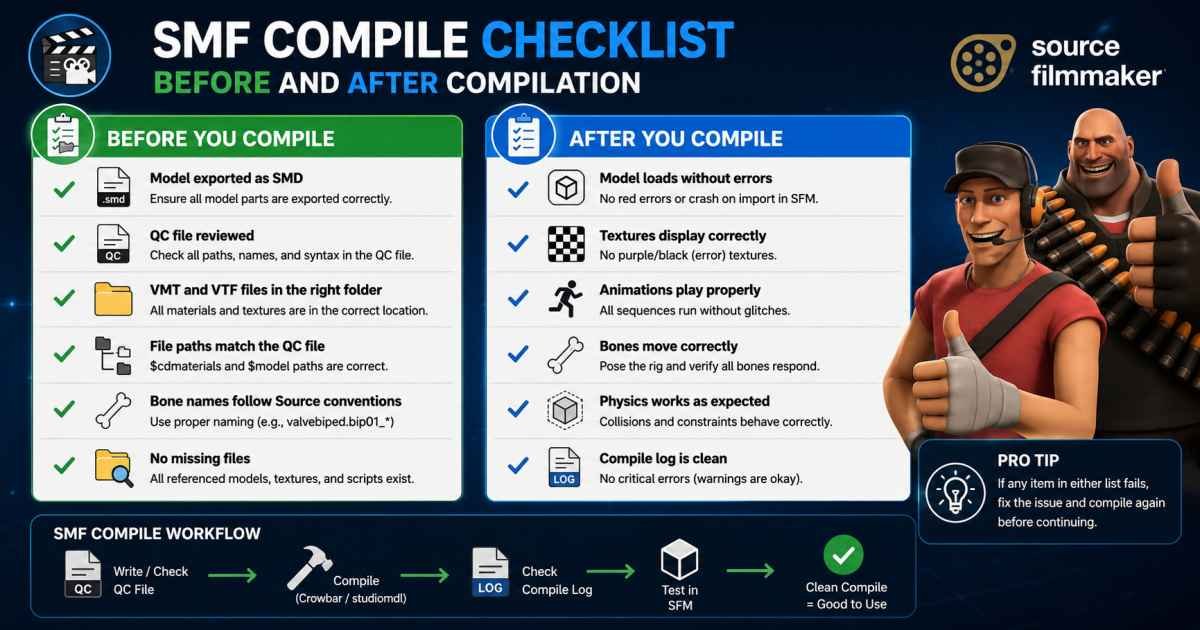
In the vast ecosystem of digital content creation and community management, few acronyms carry as much weight and as many meanings as “SMF.” For some, it stands for Source Filmmaker, a powerful tool for crafting cinematic masterpieces using game assets. For others, it represents Simple Machines Forum, a cornerstone of open-source community building. However, one term consistently emerges as a critical, yet often misunderstood, process: “SMF compile.” Regardless of which SMF you are working with, the concept of compilation is the linchpin that transforms raw, unworkable elements into polished, functional projects. This guide is designed to demystify the compilation process across both of these primary domains. Whether you are a forum administrator looking to install custom modifications or a digital artist preparing assets for rendering, understanding the intricacies of compilation will save you from technical headaches and elevate the quality of your work to a professional standard. Compilation is not just a technical hurdle; it is a fundamental practice that ensures compatibility, optimizes performance, and unlocks the full potential of your software or creative endeavors. We will explore the distinct workflows for compiling in Source Filmmaker and preparing components for Simple Machines Forum, providing a comprehensive roadmap to mastery.

Part 1: Compiling for Source Filmmaker (SFM)

What is SFM Compile and Why Does It Matter?

In the context of Source Filmmaker, “compilation” is the overarching process of preparing a scene and its assets for the final, polished output. This involves more than just hitting the “render” button; it is about ensuring every element—from a custom character model to a complex lighting setup—is optimized and correctly formatted to function within the Source engine. The compilation process is crucial because it prevents a myriad of issues that can plague animators, such as visual glitches, texture flickering, frustrating program crashes, and animation stuttering. The primary goal of any compile is to convert raw animation data and high-poly 3D models into a stable, playable, or renderable format that balances aesthetic quality with system performance.

The process can be broken down into three core preparation steps. First, scene optimization involves cleaning up the project by removing unused models and props to free up processing power and memory. It is also wise to check the polygon count of your models, as overly complex geometry can significantly slow down rendering times and even cause crashes. Second, finalizing camera and lighting settings is essential to ensure the scene looks as intended before the long render begins; properly configured lighting prevents washed-out scenes or harsh shadows, while subtle effects like Depth of Field add a layer of cinematic realism to the final export. Finally, ensuring your animations are smooth is critical; this means refining motion curves and checking for unnatural, jerky movements that might be less obvious during the initial creation process but become glaringly obvious in the final render.

The Compilation Methods: Choosing the Right Output

When you are ready to compile your project in SFM, you have several export options, each suited for different needs. The most recommended method for professional-quality work is the Image Sequence Export. This approach renders each frame of your animation as a separate high-quality image file, such as PNG or TGA. While this requires a second step—combining the images into a video file using software like Adobe Premiere or DaVinci Resolve—it is the gold standard because it preserves the absolute maximum quality without any compression artifacts. It also offers the flexibility to stop and resume rendering if a crash occurs. For quick previews or small, simple projects, you might choose AVI Video Rendering. This exports your animation directly as a video file, which is convenient, but it often results in larger file sizes and lower quality due to compression, and SFM may be more prone to crashing during a lengthy AVI export. Finally, for still images like posters or thumbnails, Poster Rendering is used. This method allows you to render a single frame at very high resolutions with advanced effects like Super Depth of Field, making it ideal for promotional artwork.

Adjusting Render Settings for Maximum Quality

To get the best results from your compile, you must fine-tune the render settings within SFM. The resolution of your output is paramount; for high-definition content, 1920×1080 (Full HD) is standard, while 3840×2160 (4K) is becoming increasingly popular for high-end projects. The frame rate (FPS) determines the smoothness of your animation; 30 FPS is standard for a cinematic feel, while 60 FPS is preferred for slow-motion shots or action-heavy sequences to create a buttery-smooth effect. Quality settings like Motion Blur and Anti-Aliasing are also essential; setting Motion Blur to “High” adds a realistic blur to fast-moving objects, reducing the “stutter” effect that can plague digital animation, while enabling Anti-Aliasing smooths out jagged “jaggies” on edges for a cleaner, more polished image.

Troubleshooting Common SFM Compile Errors

Even seasoned animators encounter errors during the compile process. Understanding these common pitfalls is the key to a smooth workflow. One of the most frustrating issues is SFM crashing during the render, often caused by the program running out of RAM or Video RAM (VRAM). This typically happens when a scene is too complex, using too many high-polygon models or high-resolution textures. The fix involves reducing the strain on your system; this could mean lowering texture resolutions, deleting unused assets, or rendering the scene in smaller “chunks” to avoid overloading the system memory. Another common problem is a rendered video appearing completely black or blank, which is usually a lighting issue; ensure you have proper light sources in the scene and try disabling “Progressive Refinement Mode” if it is active. Finally, if your final output looks low-quality or blurry, it is likely due to exporting directly to AVI with compression; the best solution is to switch to rendering an image sequence to ensure a lossless, detailed output.

Part 2: Compiling for Simple Machines Forum (SMF)

Defining “SMF Compile” in a Web Context

Moving away from 3D animation, the term “SMF compile” takes on a distinctly different meaning within the world of Simple Machines Forum. Unlike Source Filmmaker, the PHP code that powers SMF does not need to be “compiled” in the traditional sense of being converted into machine code. Instead, “SMF compile” is a colloquial term used by developers and forum administrators to describe the process of “assembling,” “packaging,” or “building” components for the forum software. This includes tasks like creating installable add-on packages, assembling theme files, and managing system caches. These are practical tasks of preparing and organizing PHP files, templates, CSS, JavaScript, and configuration data so that SMF can effectively read and use them. While it is not a technical compilation, the goal is the same: to take raw, scattered components and bring them together into a functional, integrated whole.

Compiling and Packaging Add-Ons

The most common “SMF compile” task for developers is the creation of a package—a mod or add-on that extends the forum’s functionality. This is a structured process. The developer must first organize all the necessary files—PHP source code, template files (often with SMF-specific tags), language strings for internationalization, and any associated assets like images—into a specific folder structure. The heart of the package is an installation XML file, which acts as a manual for the SMF Package Manager. This file tells the software exactly which files to copy to which directories, which lines of code to modify in existing files, and how to handle database changes. Finally, all these elements are compressed into a single archive file, like a ZIP, which forum administrators can easily upload and install through their admin panel. In this context, the “compile” is the developer’s act of bundling the code and creating the crucial instructions needed for flawless integration.

Building and Compiling Themes

Creating and packaging a custom theme is a similar but distinct “SMF compile” process. Theme designers must create a set of template files that adhere to SMF’s coding standards, complete with CSS for styling and JavaScript for client-side interactions. These themes must be organized into a specific directory structure that the software expects. A critical file in this process is the theme_info.xml (or similar) file, which describes the theme to the SMF system, listing its name, version, and the creator. Once these components are prepared and bundled into an archive, the theme is “compiled” for distribution. Administrators can then install the theme through their admin panel, allowing users to change the look and feel of their community instantly.

Cache Compilation and Performance

Finally, “SMF compile” can refer to the management of the forum’s cache. To boost performance and speed up page loading, SMF saves pre-built versions of its pages, configurations, and templates into a cache directory. When an administrator makes changes—for example, installing a new mod or altering a template—they may need to “clear the cache.” After clearing, SMF automatically rebuilds and “re-compiles” these cached versions of the data using the updated files and settings. This ensures that users see the new changes and that the site runs as efficiently as possible. This is a simple yet vital “compile” task for maintaining a fast and responsive forum.

Conclusion

Mastering the “SMF compile” process is an essential skill for anyone looking to achieve professional-quality results in their chosen medium, whether it is creating a cinematic masterpiece in Source Filmmaker or building a thriving online community with Simple Machines Forum. In Source Filmmaker, compilation is the technical bridge between your creative vision and the final render; it requires meticulous attention to scene optimization, the selection of correct render settings, and a robust understanding of troubleshooting common errors. The decision to use an image sequence over a direct AVI video, for instance, can be the difference between a pixelated, artifact-ridden output and a pristine, broadcast-quality film. Similarly, for the forum administrator, the compilation of packages and themes is the lifeblood of customization and community engagement. Understanding how to assemble an add-on or prepare a theme ensures that these modifications integrate seamlessly, enhancing user experience without breaking the core functionality of the site. Ultimately, whether you are fine-tuning the Depth of Field in a render or carefully editing a package-info.xml file, the core principle remains the same: effective compilation transforms raw potential into a polished, functional reality.

Frequently Asked Questions (FAQ)

Q1: What is the main difference between “SMF compile” for Source Filmmaker and “SMF compile” for Simple Machines Forum?
A1: The terms are completely different despite sharing the same acronym. In Source Filmmaker, it refers to the rendering process and asset preparation for creating videos and animations. In Simple Machines Forum, it is a colloquial term for packaging and installing modifications, themes, or managing caches for forum software, as the PHP code does not require traditional compilation.

Q2: Why should I export my Source Filmmaker project as an image sequence instead of an AVI video?
A2: Exporting as an image sequence (like PNGs or TGAs) is highly recommended for preserving the absolute best quality because it avoids the compression artifacts common in video files like AVI. It also provides more flexibility in post-production and protects against project loss, as you can easily resume rendering from the last frame if the process crashes.

Q3: My SFM render keeps crashing. What is the most likely cause and fix?
A3: The most common cause of SFM crashing during a render is the program running out of system memory (RAM) or graphics memory (VRAM), usually due to overly complex scenes. You can fix this by reducing the quality or number of assets in your scene, rendering in smaller chunks, or lowering the texture resolutions to lighten the load on your computer.

Q4: How do I install a custom modification or theme in Simple Machines Forum?
A4: You do this through the “Package Manager” in your SMF admin panel. First, you need the package file (usually a ZIP archive) that contains the “compiled” code and an installation XML file. You upload this file through the admin interface, and the package manager will follow the XML instructions to automatically modify the necessary files and install the add-on.

Q5: What is the purpose of the cache in Simple Machines Forum?
A5: SMF uses a cache to store pre-built versions of pages and configuration settings to improve loading speed and server performance. When you make changes to your forum, you may need to clear the cache from the admin panel. SMF then automatically “re-compiles” and rebuilds these cached files using the new settings, ensuring users see the updates promptly.

Continue Reading

Trending