
Art
What is Rubensian? Complete Guide to Rubensian Art, Style and Meaning in 2026

Published
3 months agoon
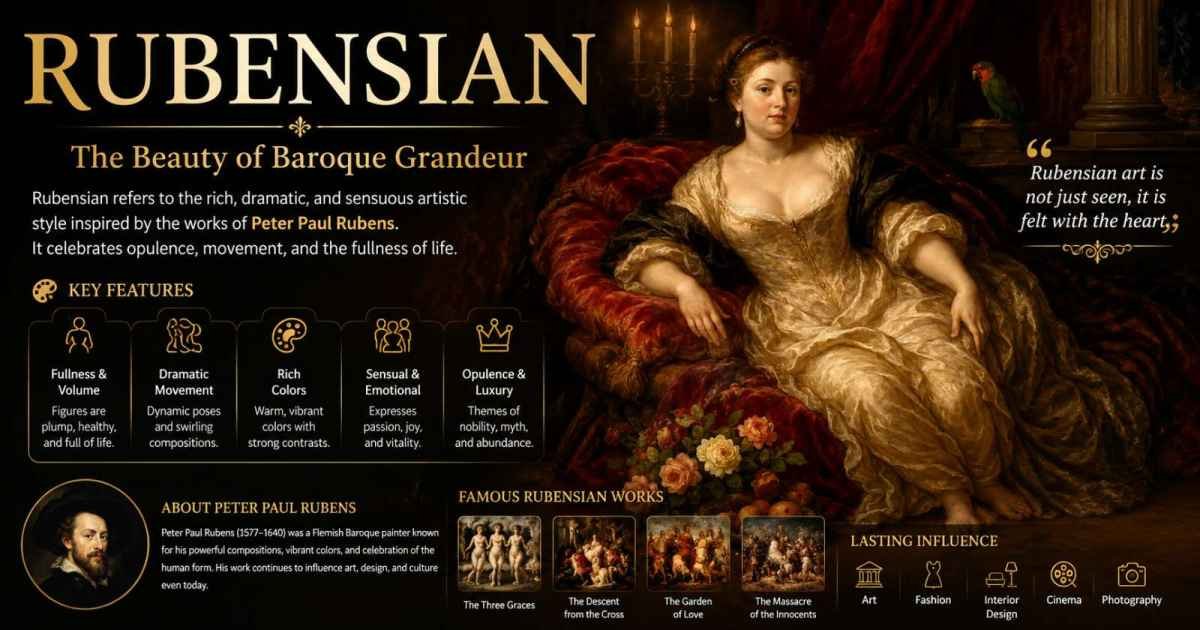
Table of Contents
ToggleRubensian is one of the most influential and enduring terms in the history of art. More than just a painting style, it represents a world of movement, emotion, dramatic storytelling, rich color, and Baroque grandeur inspired by the legendary Flemish artist Peter Paul Rubens. If you’ve ever admired a masterpiece filled with voluptuous figures, swirling drapery, glowing skin, and powerful energy, you’ve experienced the unmistakable Rubensian style.
In 2026, the word Rubensian is experiencing renewed popularity across fine art, fashion, photography, AI-generated artwork, body positivity, and luxury interior design. Artists and designers continue to draw inspiration from Rubens’ timeless vision, making the term more relevant than ever.
This complete guide explains the meaning of Rubensian, its history, defining characteristics, famous masterpieces, and why the Rubensian aesthetic continues to shape modern creativity.
What Does Rubensian Mean
The word Rubensian comes directly from Peter Paul Rubens (1577–1640), one of the greatest painters of the Flemish Baroque period.
At its simplest, Rubensian means “in the style of Peter Paul Rubens.” However, over the centuries, the meaning has expanded well beyond painting.
In art history, Rubensian describes artwork featuring:
- Dynamic compositions
- Rich, saturated colors
- Luminous flesh tones
- Powerful movement
- Emotional storytelling
- Dramatic lighting
Outside the art world, Rubensian is commonly used to describe a fuller, voluptuous, and curvaceous female figure, similar to the women frequently portrayed by Rubens. Terms like “Rubensian beauty” or “Rubensian figure” celebrate strength, vitality, abundance, and sensuality, rather than narrow beauty ideals.
Today, the word is generally viewed as a compliment, recognizing timeless elegance, confidence, and natural beauty.
The Origin and History of the Rubensian Style
The Rubensian tradition began during the remarkable career of Peter Paul Rubens, who was far more than a painter. He was also a diplomat, scholar, collector, entrepreneur, and one of Europe’s first internationally celebrated artists.
Operating one of the largest and most successful workshops of the 17th century, Rubens produced monumental religious commissions, mythological scenes, royal portraits, hunting paintings, and historical masterpieces.
Following his death in 1640, his artistic influence spread rapidly across Europe. His students, including Anthony van Dyck and Jacob Jordaens, continued developing and popularizing his techniques.
During the 18th century, critics began using the adjective Rubensian to describe paintings that embraced his dramatic energy, brilliant color, and expressive realism.
One of the most famous artistic debates in European history—the Rubénistes vs. Poussinistes controversy at the French Royal Academy—centered on Rubens’ philosophy. The Rubénistes argued that color, emotion, and visual impact were more important than strict drawing and line. This debate profoundly influenced Western art for centuries and firmly established the Rubensian legacy.
7 Defining Characteristics of Rubensian Art
Recognizing a Rubensian masterpiece becomes easier once you understand its defining characteristics.
1. Dynamic Movement and Dramatic Composition
Nothing in a Rubensian painting feels static.
Figures twist, leap, fall, embrace, and struggle through diagonal compositions that create unstoppable movement. Instead of balanced symmetry, Rubens filled his paintings with flowing action, making viewers feel as though they have entered the middle of a dramatic story.
2. Voluptuous Flesh and Sensual Figures
Perhaps the most recognizable feature of Rubensian art is its celebration of the human body.
Rubens painted luminous skin using delicate layers of pink, ivory, peach, and crimson, creating warm flesh that appears alive. His women are often curvy, healthy, and full-bodied, while his male figures display muscular strength and realism.
His mastery of carnation painting—the technique of realistically depicting flesh—remains admired by artists today.
3. Rich Colors and Dramatic Lighting
Rubens employed a luxurious palette filled with:
- Deep crimson reds
- Royal blues
- Golden yellows
- Creamy whites
- Earthy browns
- Emerald greens
Combined with chiaroscuro—the dramatic contrast between light and shadow inspired by Caravaggio—his paintings achieve remarkable depth and theatrical impact.
4. Powerful Emotion and Storytelling
Rubens specialized in moments of intense emotion.
Whether illustrating biblical miracles, mythological battles, romantic encounters, or royal triumphs, every face and gesture communicates passion, excitement, grief, joy, or triumph.
This emotional intensity lies at the heart of Baroque storytelling.
5. Luxurious Textures and Opulent Detail
One hallmark of Rubensian art is extraordinary attention to texture.
His paintings feature:
- Flowing silk
- Rich velvet
- Gleaming armor
- Soft fur
- Golden jewelry
- Flowing hair
- Lush landscapes
Every surface appears tangible, contributing to the grandeur that made Rubens the preferred painter of kings, queens, aristocrats, and the Catholic Church.
6. Monumental Religious and Mythological Subjects
Rubens frequently painted:
- Christian altarpieces
- Greek mythology
- Roman legends
- Historical battles
- Royal ceremonies
- Heroic hunting scenes
Many of these works were enormous in scale, designed to overwhelm viewers with both artistic brilliance and emotional power.
7. Masterful Human Anatomy
Rubens devoted years to studying classical sculpture, anatomy, and life drawing.
His understanding of muscles, movement, weight, and proportion allowed him to create figures that feel remarkably physical and believable. Every body possesses convincing mass, balance, and vitality.
Why Rubensian Style Is More Relevant Than Ever in 2026
Although Rubens lived over 400 years ago, his artistic philosophy continues influencing modern creative industries.
Body Positivity
Today’s body positivity movement embraces the Rubensian celebration of healthy, confident, natural curves. Rather than promoting unrealistic ideals, the Rubensian aesthetic values diversity, strength, and authenticity.
Fashion
Fashion designers increasingly incorporate flowing fabrics, dramatic silhouettes, jewel tones, rich textures, and glowing skin into collections inspired by Baroque elegance. Editorial photography often describes radiant, curvy models as possessing a Rubensian glow.
Interior Design
Rubensian interiors embrace maximalism, featuring:
- Velvet furniture
- Gold accents
- Ornate frames
- Rich colors
- Dramatic curtains
- Classical artwork
As homeowners move beyond minimalist trends, warm and luxurious spaces inspired by Baroque design continue gaining popularity.
AI Art and Digital Creativity
In 2026, “Rubensian” has become one of the most frequently used prompts in AI image generation.
Creative prompts like:
- Rubensian portrait
- Rubensian lighting
- Rubensian Baroque painting
- Rubensian beauty
produce artwork featuring warm skin tones, dramatic illumination, classical compositions, and painterly realism.
Most Famous Rubensian Paintings Everyone Should Know
Understanding Rubensian art becomes much easier by studying Rubens’ greatest masterpieces.
The Descent from the Cross (1612–1614)
One of the greatest religious paintings ever created, combining emotional sorrow with remarkable composition, glowing flesh tones, and dynamic movement.
The Garden of Love (c. 1633)
A celebration of romance, luxury, and elegant beauty featuring richly dressed couples within an idyllic garden.
The Judgment of Paris
Perhaps the ultimate representation of Rubensian beauty, showcasing graceful, voluptuous female figures inspired by classical mythology.
Samson and Delilah (1609–1610)
Renowned for its dramatic lighting, luxurious fabrics, emotional tension, and masterful storytelling.
The Elevation of the Cross
A breathtaking display of muscular anatomy, diagonal composition, and monumental Baroque drama.
These masterpieces continue attracting millions of visitors to museums worldwide and remain essential references for artists and students.
How to Create a Rubensian Look Today
The Rubensian aesthetic extends beyond museums and can inspire modern creative work.
For Artists
- Study live models and classical anatomy.
- Use warm underpainting and transparent glazes.
- Focus on believable skin tones rather than perfect outlines.
- Build dynamic compositions using diagonal movement.
For Photographers
- Use soft directional window light.
- Incorporate velvet, silk, or textured fabrics.
- Encourage relaxed, natural poses.
- Edit with warm highlights and rich shadows to create painterly depth.
For Fashion and Makeup
A Rubensian-inspired style emphasizes:
- Glowing, healthy skin
- Rosy cheeks
- Golden highlights
- Rich jewel-tone clothing
- Flowing romantic silhouettes
- Natural elegance instead of heavy contouring
The goal is to celebrate warmth, vitality, and timeless beauty.
Conclusion
The Rubensian style has remained influential for more than four centuries because it celebrates what is universally human—life, movement, emotion, abundance, and beauty.
From magnificent Baroque paintings to modern fashion, interior design, AI-generated art, and body positivity, the Rubensian aesthetic continues inspiring creators across the world in 2026.
Whether you are an artist, student, designer, photographer, historian, or art enthusiast, understanding the meaning of Rubensian offers a deeper appreciation for one of history’s greatest artistic traditions. It reminds us that beauty is not defined by rigid perfection but by energy, confidence, richness, emotion, and authenticity.
If you want to experience the true power of Baroque art, begin with Peter Paul Rubens. Once you recognize the unmistakable qualities of Rubensian style, you’ll start seeing its influence everywhere—from museum masterpieces to contemporary creative trends.
You may like
Art
The Hay Wain by John Constable: The Complete Guide to Britain’s Most Famous Landscape (2026)
Published
3 months agoon
July 18, 2026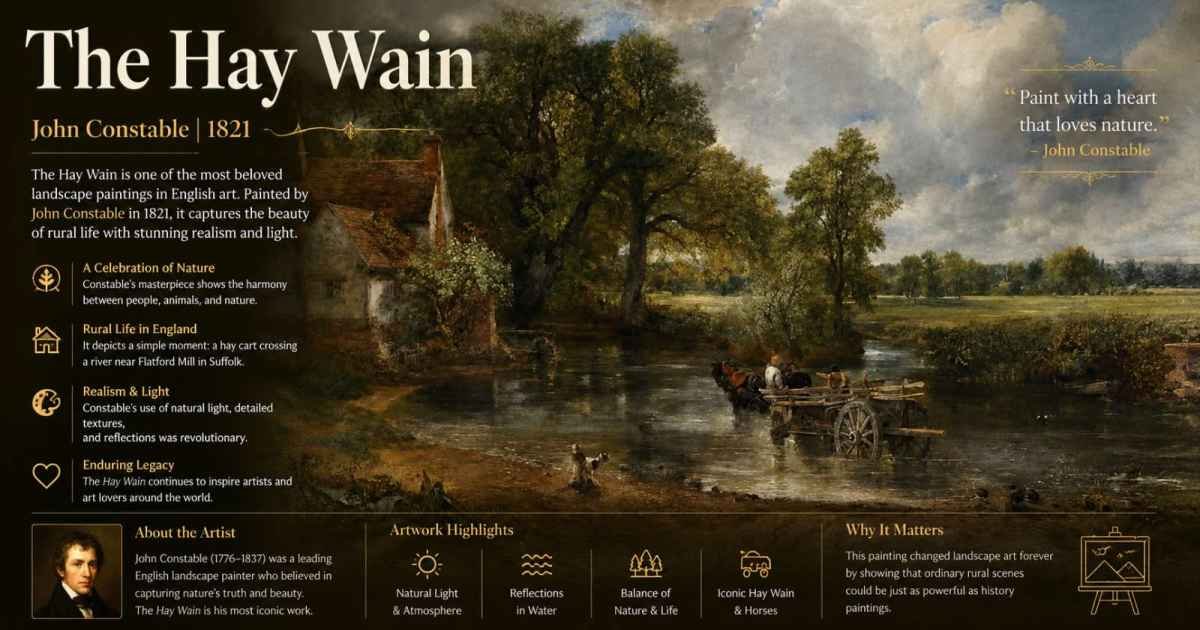
Table of Contents
ToggleThe Hay Wain is far more than a beautiful countryside painting—it is the definitive image of England and one of the greatest masterpieces in the history of Western art. Painted in 1821 by John Constable, this iconic work of British Romanticism transformed the way artists viewed nature and inspired generations of painters across Europe.
If you have ever seen a hay wagon crossing a shallow river on a postcard, calendar, biscuit tin, or history book, chances are you have already seen The Hay Wain. More than two centuries after it was painted, it remains one of the most recognizable landscape paintings in the world.
In this 2026 guide, you’ll discover the painting’s fascinating history, artistic techniques, hidden symbolism, lasting influence, and why millions of visitors continue to admire it at The National Gallery, London.
What Is The Hay Wain? Overview and Quick Facts
The Hay Wain, originally titled Landscape: Noon, is an oil-on-canvas masterpiece completed in 1821 by English landscape painter John Constable (1776–1837).
Rather than depicting kings, battles, or mythology, Constable chose to celebrate ordinary rural life. The painting captures a peaceful summer afternoon on the River Stour, which forms part of the border between Suffolk and Essex in England.
At the center of the composition is a wooden hay wagon (wain) pulled by three horses crossing the shallow river. On the left stands the famous Willy Lott’s Cottage, while open fields, trees, and expansive skies create an atmosphere of calm and harmony.
Quick Facts
- Artist: John Constable
- Completed: 1821
- Original Title: Landscape: Noon
- Common Name: The Hay Wain
- Medium: Oil on canvas
- Dimensions: 130.2 × 185.4 cm (51.25 × 73 inches)
- Series: One of Constable’s famous “Six-Footers”
- Current Location: The National Gallery, London
- Art Movement: Romanticism with early Naturalist influences
Interestingly, Constable never officially called the painting “The Hay Wain.” The popular title emerged later because of the farm wagon featured prominently in the scene.
The Story Behind The Hay Wain
To fully appreciate The Hay Wain, it helps to understand John Constable’s deep personal connection to the landscape.
Constable grew up in East Bergholt, Suffolk, where his family operated Flatford Mill for decades. The countryside surrounding the River Stour became the artist’s greatest source of inspiration throughout his career.
Although the painting represents a real location, Constable did not paint the final work outdoors. Instead, he spent years making open-air sketches, cloud studies, and oil paintings directly from nature before assembling the final large canvas in his London studio. The masterpiece itself was completed in roughly five months.
When The Hay Wain debuted at the Royal Academy Exhibition in 1821, it surprisingly failed to attract a buyer. Many British critics considered Constable’s truthful representation of ordinary farmland too unconventional.
Everything changed in 1824, when the painting was exhibited at the Paris Salon.
French audiences immediately recognized its brilliance. The painting received a gold medal, awarded with the support of King Charles X of France, and profoundly influenced leading French artists.
Perhaps its greatest admirer was Eugène Delacroix, who reportedly revised portions of his own masterpiece The Massacre at Chios after studying Constable’s vibrant colors and expressive brushwork.
This influence later extended to painters including Claude Monet, Camille Pissarro, and the entire Impressionist movement.
The painting eventually entered The National Gallery, London, in 1886, thanks to collector Henry Vaughan, where it remains one of Britain’s greatest artistic treasures.
Visual Analysis: Composition, Light, and Revolutionary Technique
One reason The Hay Wain continues to captivate viewers is its remarkable balance between realism and emotion.
Composition
Constable carefully guides the viewer’s eye using the gentle diagonal movement of the River Stour.
The wagon crossing the ford becomes the central focal point, balanced perfectly by:
- Willy Lott’s Cottage on the left
- Open countryside on the right
- Towering trees framing the scene
- A dramatic yet natural English sky above
The result is a composition that feels both structured and effortlessly natural.
Light and Atmosphere
Unlike many painters of his era who focused on theatrical lighting, Constable became almost scientific in his study of weather.
He spent countless hours sketching cloud formations, sunlight, humidity, and atmospheric changes outdoors.
The lighting in The Hay Wain represents soft midday sunshine, filtered through drifting English clouds. Reflections shimmer across the water, while subtle shadows create extraordinary depth.
Brushwork
One of Constable’s greatest innovations was his energetic painting technique.
Instead of smooth academic surfaces, he applied:
- Broken brushstrokes
- Thick impasto
- Tiny flecks of white paint
- Multiple shades within leaves, grass, and water
These sparkling highlights became known as “Constable’s Snow.”
Although controversial in 1821, this revolutionary technique anticipated the methods later embraced by the Impressionists.
Hidden Meanings and Symbolism
At first glance, The Hay Wain appears to depict nothing more than peaceful countryside life.
Yet beneath its tranquil surface lies powerful symbolism.
A Portrait of Vanishing England
Constable painted during the early decades of the Industrial Revolution, when factories, machinery, and urban expansion were rapidly transforming Britain.
His painting preserves an idealized agricultural world that many feared was disappearing forever.
Rather than celebrating industrial progress, Constable celebrated nature, tradition, and rural identity.
Willy Lott’s Cottage
The famous cottage belonged to Willy Lott, a local farmer who reportedly lived there nearly his entire life, leaving for only a few days.
For Constable, the cottage symbolized:
- Permanence
- Family roots
- Stability
- Belonging
The Hay Wagon
The empty wagon crossing the river represents more than farming.
It reflects the balance between human labor and nature, showing people working with the landscape rather than dominating it.
The low river suggests late summer, traditionally associated with harvest, prosperity, and reflection.
Why The Hay Wain Was Revolutionary
Today, The Hay Wain may seem traditional, but in 1821 it challenged nearly every artistic convention.
1. Everyday Subjects Became Great Art
Instead of heroic legends or biblical scenes, Constable painted:
- Farm workers
- Rivers
- Trees
- Clouds
- Country cottages
This elevated ordinary English life to the level of fine art.
2. Truth Over Idealization
Academic painters often improved nature.
Constable painted:
- Uneven roads
- Aging timber
- Muddy riverbanks
- Weathered buildings
- Real cloud formations
His commitment to authenticity shocked many early critics.
3. Emotion Through Landscape
As a leading Romantic artist, Constable believed landscapes could communicate emotion without needing dramatic narratives.
His expressive brushwork conveyed feeling directly through light, weather, and atmosphere, laying important foundations for modern landscape painting.
Where to See The Hay Wain in 2026 and Its Lasting Legacy
The original The Hay Wain is displayed in Room 34 of The National Gallery, London, where admission remains free.
For many visitors, standing before the enormous canvas reveals details impossible to appreciate in reproductions, especially the sparkling texture of Constable’s Snow.
Art lovers can also visit the real location at Flatford, Suffolk, within the beautiful Dedham Vale National Landscape (formerly an Area of Outstanding Natural Beauty).
Remarkably, both:
- Willy Lott’s Cottage
- Flatford Mill
still stand today and are cared for by the National Trust, allowing visitors to experience the same scenery that inspired Constable more than two centuries ago.
The Painting’s Legacy
Few paintings have influenced art as profoundly as The Hay Wain.
Its legacy includes:
- Inspiring French Romantic painters
- Helping shape Impressionism
- Becoming Britain’s most reproduced landscape painting
- Appearing on calendars, posters, stamps, books, biscuit tins, puzzles, and souvenirs
- Remaining a cultural symbol of the English countryside
In 2022, the painting also attracted worldwide attention when environmental protesters briefly attached themselves to its frame during a climate demonstration. Fortunately, the artwork itself remained unharmed, protected by glass.
5 Fascinating Facts About The Hay Wain
Here are some surprising facts many people don’t know:
- It was painted mainly in Constable’s London studio, using outdoor sketches collected over many years.
- Willy Lott was a real person who spent nearly his entire life in the cottage shown in the painting.
- A small dog appears near the left riverbank, quietly observing the wagon crossing.
- The painting failed commercially in England but became an artistic sensation after its exhibition in France.
- Its influence helped pave the way for Impressionism, making Constable one of the most important landscape painters in art history.
Final Thoughts
More than 200 years after its creation, The Hay Wain continues to symbolize Britain’s artistic heritage, rural identity, and enduring connection to nature. What first appears to be a simple countryside scene reveals extraordinary technical mastery, emotional depth, and historical significance.
John Constable transformed an everyday landscape into a timeless masterpiece that reshaped European painting. His careful observation of light, weather, atmosphere, and rural life inspired artists from Delacroix to Monet, proving that the ordinary could be truly extraordinary.
Whether you are an art student, history enthusiast, traveler, or simply someone who appreciates beautiful landscapes, The Hay Wain remains essential viewing. If you find yourself in London in 2026, make time to visit The National Gallery, stand before this iconic canvas, and watch Constable’s Snow sparkle exactly as it has for generations.
Art
ArcyArt Blog: The Ultimate 2026 Guide to the World’s Most Inspiring Art Platform
Published
3 months agoon
July 18, 2026
Table of Contents
ToggleThe ArcyArt Blog has become one of the most respected online destinations for artists, collectors, students, and creative enthusiasts in 2026. More than just a website filled with articles, ArcyArt is a thriving global art community, an artists directory, an educational platform, and a growing digital marketplace that empowers creators from around the world.
Whether you’re passionate about traditional painting, digital illustration, mixed media, contemporary art, or AI-assisted creativity, ArcyArt provides valuable resources designed to help artists improve their skills, grow their careers, and connect with an international audience.
Unlike many art websites that simply display finished artwork, ArcyArt celebrates the entire creative journey—from learning the fundamentals to building a successful artistic career.
What is ArcyArt Blog
The ArcyArt Blog is a comprehensive online platform created by passionate artists and creative professionals with the goal of educating, inspiring, and connecting people through art.
Its content covers nearly every aspect of the creative world, including:
- Drawing tutorials
- Painting techniques
- Digital art guides
- Mixed media projects
- Color theory
- Art history
- Creative thinking
- Professional portfolio development
- Art marketing strategies
- Career advice for artists
One of ArcyArt’s strongest features is its practical approach. Rather than overwhelming readers with theory alone, the blog provides step-by-step tutorials, practical exercises, and actionable advice that artists can immediately apply to improve their work.
Another standout feature is the ArcyArt Artists Directory, a comprehensive online directory where artists can showcase portfolios, introduce themselves to collectors, and gain worldwide visibility.
By combining education, networking, and promotion under one platform, ArcyArt has evolved into far more than a traditional art blog—it has become a complete ecosystem for artistic growth.
Why ArcyArt Blog Stands Out in 2026
There are thousands of art websites online, but ArcyArt Blog continues to distinguish itself through several unique strengths.
1. Practical Learning
Every article focuses on techniques that artists can use immediately. Instead of vague artistic philosophy, readers receive clear demonstrations, exercises, and professional guidance.
2. Diversity and Inclusion
ArcyArt actively promotes artists from diverse cultural backgrounds and artistic traditions. From South African artists to contemporary digital creators across the globe, the platform embraces creativity without borders.
3. Community-Based Growth
The platform encourages members to share progress, receive constructive critiques, participate in discussions, and support fellow artists. This collaborative environment helps artists remain motivated while continuously improving.
4. Traditional Meets Modern
ArcyArt celebrates classical artistic disciplines like:
- Oil painting
- Watercolor
- Sculpture
- Portrait drawing
while also exploring modern innovations such as:
- Digital illustration
- AI-generated art
- NFT education
- Virtual exhibitions
- Creative software tutorials
5. Free Educational Resources
Many tutorials, guides, interviews, and learning materials remain freely accessible, making quality art education available regardless of experience level or financial background.
Key Features That Make ArcyArt More Than Just a Blog
One reason for ArcyArt’s growing popularity is its extensive collection of tools and opportunities designed specifically for artists.
Personalized Artist Profiles
Artists can build detailed professional profiles showcasing:
- Portfolio collections
- Artist biographies
- Career achievements
- Artistic styles
- Contact information
These profiles help creators establish their online presence while attracting collectors and collaborators.
Virtual Exhibitions
Geographic barriers disappear through ArcyArt’s virtual exhibitions, allowing artists to present work to audiences worldwide without renting expensive gallery space.
Online Art Marketplace
The platform includes an online marketplace where artists can sell artwork directly to collectors, often avoiding the high commissions associated with traditional galleries.
Educational Programs
ArcyArt regularly provides:
- Workshops
- Webinars
- Tutorials
- Mentorship programs
- Art competitions
- Expert interviews
These learning opportunities help artists continue developing both technical and professional skills.
Networking Opportunities
The community allows artists to connect with:
- Collectors
- Curators
- Galleries
- Fellow artists
- Mentors
- Creative collaborators
Building relationships has become just as important as mastering artistic techniques, and ArcyArt makes networking much easier.
Top Art Trends and Creative Techniques Featured on ArcyArt in 2026
Art continues evolving rapidly, and ArcyArt consistently highlights the newest creative movements.
Fluid Art & Acrylic Pouring
Fluid art remains incredibly popular thanks to its colorful, unpredictable abstract effects created using pouring mediums and silicone oil.
Digital Collage
Artists combine photography, textures, typography, and digital illustration using tools like:
- Photoshop
- Procreate
- GIMP
Digital collage allows creators to tell visually rich stories through layered compositions.
Eco-Friendly Art
Sustainability has become one of the biggest artistic movements of 2026.
ArcyArt encourages artists to explore:
- Recycled materials
- Natural pigments
- Eco-conscious canvases
- Sustainable studio practices
Mixed Media Artwork
Many contemporary artists now combine traditional sketching, watercolor, ink, photography, and digital coloring into unique hybrid pieces.
AI-Assisted Creativity
Rather than replacing artists, AI is increasingly being used as a creative assistant.
ArcyArt publishes balanced discussions covering:
- AI art workflows
- Ethical considerations
- Creative inspiration
- Responsible AI usage
- Human creativity alongside technology
How ArcyArt Helps Artists Build Successful Careers
Technical ability alone is rarely enough for success in today’s creative economy.
ArcyArt also teaches artists how to grow professionally.
Artist Promotion
Featured Artist Spotlights, homepage showcases, and social media exposure provide talented creators with valuable visibility.
Mentorship Programs
Emerging artists can learn directly from experienced professionals who provide practical guidance and career advice.
Business Education
One of ArcyArt’s strongest advantages is its focus on the business side of art.
Topics include:
- Pricing artwork
- Building professional portfolios
- Selling online
- Branding
- Marketing
- Social media growth
- Working with collectors
- Building long-term income
Many traditional art schools spend little time teaching these essential business skills, making ArcyArt an especially valuable resource.
Continuous Learning
With regular webinars, competitions, and educational articles, artists stay updated with new techniques, software, industry trends, and creative opportunities.
How to Get Featured on ArcyArt Blog in 2026
Being featured on ArcyArt can significantly increase an artist’s exposure.
The platform generally looks for creators who demonstrate:
Originality
Develop a distinctive artistic voice rather than copying existing trends.
Technical Quality
Consistently produce polished work that demonstrates skill and craftsmanship.
Creative Impact
Create artwork capable of inspiring conversation and emotional connection.
Community Participation
Artists who actively engage with other members often receive greater visibility.
Application Tips
To improve your chances:
- Create a complete artist profile.
- Upload high-resolution portfolio images.
- Write a compelling artist statement explaining your creative vision.
- Participate in competitions and virtual exhibitions.
- Share your creative process.
- Submit original artwork consistently.
- Contribute articles, reviews, or tutorials to strengthen your presence within the community.
The Future of ArcyArt Blog and Final Verdict
Technology continues transforming the art world, and ArcyArt remains at the forefront of that evolution.
Looking ahead, the platform is expanding into exciting areas including:
- VR gallery experiences
- Global cultural exchange programs
- Advanced AI art education
- NFT learning resources
- Interactive online exhibitions
- Expanded artist networking opportunities
Despite embracing innovation, ArcyArt continues preserving the values that made it successful—creativity, education, community, and artistic authenticity.
Whether you’re just beginning your artistic journey or you’re an established professional seeking international exposure, the ArcyArt Blog offers resources that can genuinely help you grow.
Conclusion
In 2026, the ArcyArt Blog has established itself as one of the internet’s most valuable resources for artists. By combining high-quality educational content, a global artists directory, career development tools, virtual exhibitions, business education, and an inclusive creative community, it delivers far more than a typical art blog.
If your goal is to learn new techniques, discover inspiring artists, grow your creative career, build a professional portfolio, or connect with collectors worldwide, ArcyArt is a platform worth exploring. As the art world continues to embrace digital transformation, ArcyArt remains committed to helping artists thrive while celebrating creativity without boundaries.

Alexee Trevizo: Biography, Case, Background, Timeline, and Latest Legal Updates

Goonies Cast: Complete Guide to The Goonies Cast and Characters

Gina Carano Biography: MMA Career, Movies, and Life Story

LogicalShout: The Ultimate Guide to Data-Driven Digital Marketing, Tech Insights & Proven Growth Strategies

Joanna Sturm: The Historian Who Preserved the Legacy of Alice Roosevelt Longworth

93.3 Contest: Your Ultimate Guide to Winning Big on the Radio
Trending
 Tech4 months ago
LogicalShout: The Ultimate Guide to Data-Driven Digital Marketing, Tech Insights & Proven Growth Strategies
- News4 months ago
Joanna Sturm: The Historian Who Preserved the Legacy of Alice Roosevelt Longworth
- Business4 months ago
93.3 Contest: Your Ultimate Guide to Winning Big on the Radio
- Tech4 months ago
Pasonet: The Digital Phenomenon Shaping Modern Connectivity, Business, and Culture
- Fashion4 months ago
Literoticatags: Your Ultimate Guide to Navigating Erotic Literature with Precision and Pleasure
- Business3 months ago
Afdah Shut Down: Is It Safe and Legal in 2026? Top Legal Alternatives
- Crypto3 months ago
BFS Coin Complete Guide 2026: Price, Legitimacy, Tokenomics & Future Outlook
- Business3 months ago
Wooflix: The Ultimate Guide to the Multi-Faceted Brand