
News
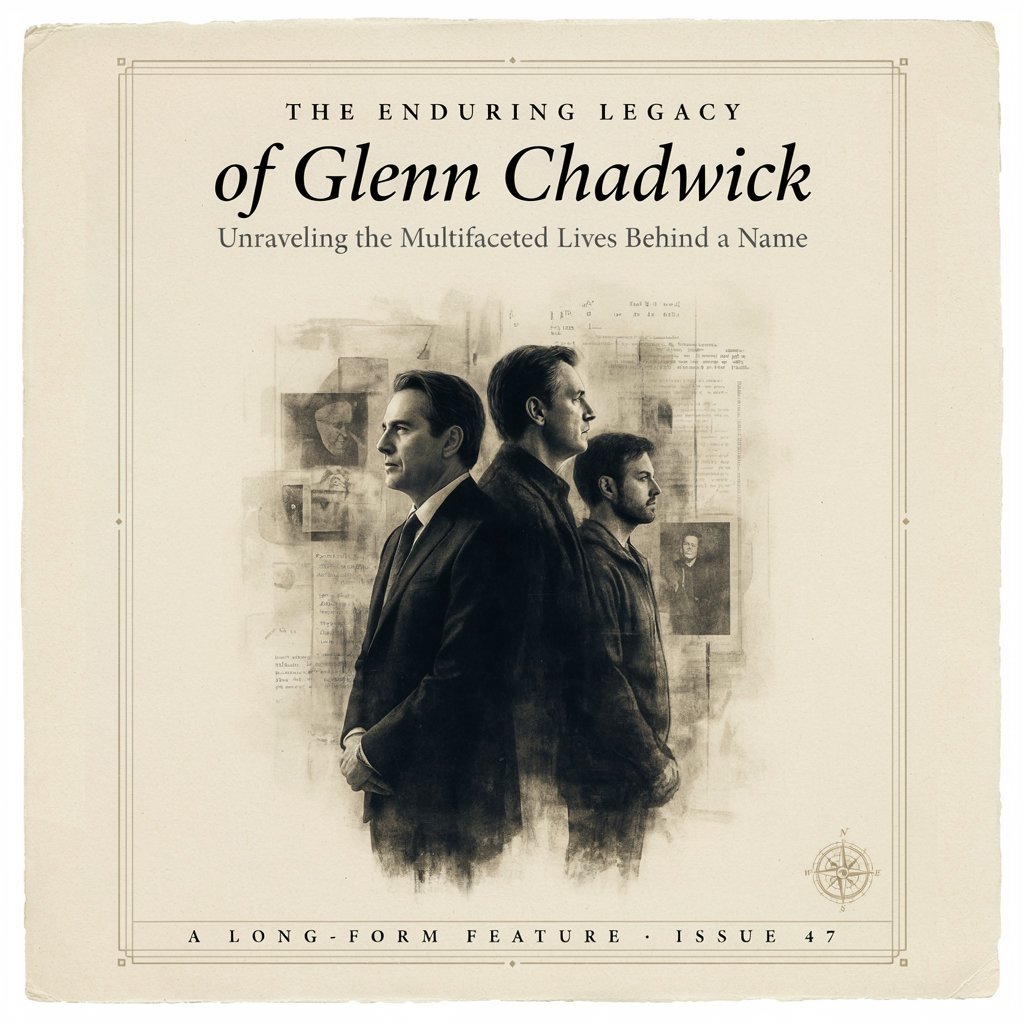
The Enduring Legacy of Glenn Chadwick: Unraveling the Multifaceted Lives Behind a Name

Introduction
The name “Glenn Chadwick” presents a fascinating case study in the interconnectedness of human endeavor across vastly different fields. While not a singular historical monolith, this name threads through the tapestry of science, art, and sport, with one particular figure—Sir James Chadwick, the Nobel Prize-winning physicist—casting the longest and most profound shadow. This article delves into the remarkable achievements of the most prominent Glenn Chadwick, whose discovery of the neutron in 1932 fundamentally altered our understanding of the universe and set the stage for the nuclear age. By exploring his life, work, and the legacy he left behind, we gain a richer appreciation for the immense impact a single individual can have on the course of human history.
Article Content
The Accidental Physicist: The Early Life of James Chadwick
The story of the most renowned “Glenn Chadwick” is rooted in the industrial heartland of England. James Chadwick was born in Bollington, Cheshire, near Manchester, in 1891, the eldest child of a cotton spinner and a domestic servant. Despite the family’s working-class background and financial constraints, Chadwick’s academic potential was recognized early, and his journey into the world of science was marked by a remarkable turn of fate. He initially intended to study mathematics at the Victoria University of Manchester, but a simple administrative error admitted him to a physics class instead. Too shy to correct the mistake, Chadwick embraced the new path, a decision that would prove to be one of the most consequential accidents in scientific history. In his final undergraduate year, he came under the tutelage of the legendary physicist Ernest Rutherford, a meeting that would define his career and set him on a course to become one of the foremost experimental physicists of the 20th century.
Chadwick’s early promise was evident, and after graduating with first-class honors, he continued his research at Rutherford’s laboratory. In 1914, he was awarded a scholarship to study under Hans Geiger in Berlin, a period of immense opportunity that was brutally interrupted by the outbreak of World War I. While in Germany, Chadwick was arrested and interned as an enemy alien in the Ruhleben civilian prison camp for the duration of the war. This ordeal, lasting over four years, was a testament to his resilience. Despite suffering from cold, hunger, and the crushing reality of confinement, he managed to pursue scientific inquiry, forming a science club with other internees and even conducting experiments with improvised materials, such as testing the radioactivity of a thorium-oxide toothpaste. This period of hardship demonstrated his unwavering dedication to physics, which he continued after his release and return to England in 1919, rejoining Rutherford to work at the world-renowned Cavendish Laboratory in Cambridge.
The Cavendish Years: From Alpha Particles to the Neutron
From 1919 to 1935, Chadwick’s career was intrinsically linked with the Cavendish Laboratory, a time he spent as Rutherford’s assistant director of research. Here, he immersed himself in the cutting-edge field of nuclear physics, investigating atomic structure, the disintegration of elements by alpha-particle bombardment, and other fundamental questions about the nature of matter. His relationship with Rutherford was complex and close, a blend of mentorship and collaboration, though it was occasionally strained by philosophical differences, particularly regarding the scale and cost of experimental apparatus. Chadwick’s work was methodical and his shy, reserved demeanor often gave new students the impression of severity, but they would later discover his profound kindness, sympathy, and deep commitment to supporting their research needs.
The crowning achievement of Chadwick’s career came in 1932, a year that stands as a watershed moment in the history of physics. The discovery of the neutron was a direct result of a scientific race. It was precipitated by the work of the French physicists Frédéric Joliot and Irène Joliot-Curie, who had reported that a mysterious, highly penetrating radiation emitted from beryllium when bombarded with alpha particles could knock protons out of hydrogen-rich materials. They interpreted this radiation as very high-energy gamma rays. However, Chadwick, drawing on his years of speculation with Rutherford about the possible existence of a neutral particle, realized immediately that this interpretation was flawed. He knew that gamma rays would not be capable of ejecting protons with the observed energy, as the laws of energy and momentum conservation would be violated.
Working with frantic urgency over a few weeks—a stark contrast to his normally meticulous pace—Chadwick designed and conducted a series of elegant experiments. He showed that the mysterious radiation could knock particles out of many light elements, not just hydrogen. By applying the laws of conservation of momentum and energy to his data, he proved that the radiation could not be gamma rays. Instead, the only explanation was that it consisted of uncharged particles with a mass similar to that of a proton. He published his groundbreaking conclusion in a letter to Nature titled “Possible Existence of a Neutron” in February 1932, followed by a full paper, “The Existence of a Neutron,” later that year. This discovery of the neutron—an elementary particle with no electric charge—was more than just the addition of another piece to the atomic puzzle; it was the key that unlocked the nucleus. Because it lacks charge, a neutron can penetrate the nucleus’s electrical barrier with ease, making it an incredibly powerful tool for probing its structure and, eventually, for unlocking the immense energy held within.
The Nobel Prize, Liverpool, and the Manhattan Project
For his revolutionary discovery, James Chadwick was awarded the Nobel Prize in Physics in 1935. By this time, he had also become frustrated with the constraints at the Cavendish. He recognized that the future of nuclear physics lay in “Big Science” and required large, expensive machines like the cyclotron particle accelerator, a vision Rutherford, who preferred simple, ingenious apparatus, firmly opposed. This disagreement led Chadwick to accept the Lyon Jones Chair of Physics at the University of Liverpool in 1935, a position that offered him the freedom and resources to build his own cyclotron. The move was a success; under his leadership, the Liverpool physics department transformed into a leading center for nuclear research, with its cyclotron becoming one of the most productive in the world.
The outbreak of World War II dramatically shifted Chadwick’s focus from pure science to the immense moral and practical challenge of developing the atomic bomb. The discovery of nuclear fission in 1938—a process where heavy atomic nuclei split, releasing tremendous energy—meant that the weapon was no longer a theoretical possibility but an inevitable one. As a member of the British “Maud Committee,” which investigated the feasibility of an atomic bomb, Chadwick played a pivotal role in the project’s direction. He realized that a full-scale bomb project would require the vast resources of the United States. He was a key author of the Maud Report in 1941, which convinced both the British and American governments that an atomic bomb was achievable in the short term.
When the British and American efforts merged into the massive Manhattan Project, Chadwick was appointed the head of the British Mission. In this role, his scientific genius was superseded by his newfound diplomatic and administrative skills. He became the scientific advisor to the Combined Policy Committee and was the only man besides General Leslie Groves, the project’s military commander, and his deputy to have access to all American research and production facilities. Chadwick’s remarkable ability to build a rapport with the notoriously difficult and tactless General Groves was instrumental in maintaining a functional and effective relationship between the allies. He tirelessly navigated political disagreements, ensured Britain’s continued stake in the project, and helped secure essential post-war uranium supplies for the UK. The immense personal toll of this responsibility was profound; he was so burdened by the moral gravity of his work that he resorted to sleeping pills to manage his anxiety.
Conclusion: The Quiet Man Who Changed the World
The story of James Chadwick, the preeminent “Glenn Chadwick,” is a powerful narrative of quiet determination, intellectual brilliance, and profound moral responsibility. From an accidental start in physics to the discovery of a fundamental particle, and from a reserved Cambridge scientist to a key diplomatic figure in the Manhattan Project, Chadwick’s life was a testament to the immense influence a single, dedicated individual can wield over the course of history. His discovery of the neutron opened the door to the nuclear age, leading to both the creation of the atomic bomb and the development of nuclear power and countless medical applications.
His character—shy, humble, and often daunted by public speaking—belied a steely resolve and an unyielding commitment to scientific excellence and what he saw as his duty to his country and the world. He was knighted in 1945 and later became Master of Gonville and Caius College, Cambridge, continuing to shape scientific education until his death in 1974. Chadwick’s life reminds us that the pursuit of knowledge is not a straightforward path, but one fraught with personal sacrifice and moral dilemmas. He stands as a towering figure in the annals of science, a man whose curiosity unlocked the secrets of the atom, and whose conscience was forever shaped by the power of that discovery. While the name “Glenn Chadwick” may also be attached to a cyclist, an artist, and a lawyer, it is Sir James Chadwick who has permanently left his mark on the fundamental fabric of our reality, a true architect of the modern age.
Frequently Asked Questions (FAQ)
Who was the most famous person named Glenn Chadwick?
The most historically significant figure associated with this name is Sir James Chadwick (the “James” being a key discrepancy that is nonetheless central to the search). He was a British physicist who was awarded the Nobel Prize in Physics in 1935 for his discovery of the neutron in 1932. This discovery was a fundamental breakthrough that revolutionized nuclear physics and paved the way for the atomic bomb and nuclear energy.
What was James Chadwick’s most important contribution to science?
His most important contribution is undoubtedly the discovery of the neutron. By proving the existence of this uncharged subatomic particle, he resolved a long-standing mystery about the structure of the atomic nucleus and provided scientists with a powerful new tool to probe and split atoms, leading directly to the nuclear age.
What was James Chadwick’s role in the Manhattan Project?
During World War II, Chadwick served as the head of the British Mission to the Manhattan Project. He acted as a scientific advisor and a crucial diplomat, working closely with U.S. General Leslie Groves to ensure a functional British-American partnership. His efforts were vital to the project’s success and to securing Britain’s position as a post-war nuclear power.
Why did James Chadwick leave the Cavendish Laboratory?
Chadwick left the Cavendish Laboratory in 1935 to accept a position at the University of Liverpool due to a major disagreement with his mentor, Ernest Rutherford. Chadwick believed that nuclear physics research would require large, expensive machines like cyclotrons. Rutherford was firmly opposed to such “Big Science” apparatus, preferring simpler, cheaper experimental methods.
When did James Chadwick receive the Nobel Prize?
James Chadwick was awarded the Nobel Prize in Physics in 1935 for his discovery of the neutron.

News
Unlocking the Mysteries of Life, Death, and Aging: The Definitive Guide to Science Writer Sue Armstrong

Introduction
In an era where scientific literacy is more critical than ever, certain voices stand out for their ability to translate complex medical and biological concepts into compelling narratives that resonate with the general public. Sue Armstrong is one such voice—a distinguished science writer and broadcaster whose career has spanned continents and tackled some of the most profound questions facing humanity. From the microscopic world of the p53 gene that guards our cells against cancer to the universal, inexorable process of aging explored in her acclaimed book “Borrowed Time,” Armstrong has established herself as a premier communicator of science . Her work, which includes extensive reporting on the AIDS pandemic, women’s health, and global public health issues for organizations like the World Health Organization and UNAIDS, offers a unique lens through which to understand the biological and social challenges of our time . This article delves deep into the life, career, and significant contributions of Sue Armstrong, exploring why her work is essential reading for anyone interested in the science of health, disease, and human longevity.
Who is Sue Armstrong A Biography of a Science Communication Pioneer
To truly appreciate the depth and breadth of Sue Armstrong‘s work, one must first understand the trajectory of her remarkable career. Born with a curiosity that would take her to the far corners of the globe, Armstrong is a science writer and broadcaster who is currently based in Edinburgh, Scotland . Her professional identity is not confined to a single role; rather, she has functioned as a journalist, a foreign correspondent, an author, and a documentary maker, all with a unifying focus on translating the often impenetrable language of science into accessible, engaging prose and audio. Armstrong’s career began with her work as a foreign correspondent, a role that saw her stationed in Brussels and later in South Africa . This period of her life was formative, as it exposed her to the front lines of major global health crises and allowed her to develop a keen understanding of how science and policy intersect on the international stage. Her journalism has appeared in a wide variety of media outlets, including the prestigious New Scientist magazine and the BBC World Service, where her ability to break down complex topics for a broad audience became a hallmark of her style .
Beyond journalism, Armstrong has had a long and distinguished association with the World Health Organization (WHO) and UNAIDS, undertaking regular assignments to write reports on critical public health issues since the 1980s . This work took her to the heart of the global health crisis, reporting from the frontline in countries as diverse as Haiti, Papua New Guinea, Uganda, Thailand, Namibia, and Serbia . Her focus on women’s health issues and the AIDS pandemic during this period gave her a unique, on-the-ground perspective that enriches her writing with a sense of humanity and urgency . It is this combination of rigorous scientific research and compassionate storytelling that defines Sue Armstrong‘s contribution to science communication, making her a trusted and authoritative figure in her field.
Key Books and Publications: Decoding the Science of Life and Death
Sue Armstrong‘s bibliography is a testament to her ability to tackle daunting scientific subjects with clarity and narrative flair. While she has authored works on a diverse range of topics, from the hidden world of pathology to the history of homeschooling, her most impactful and well-known books are those that delve into the fundamental mechanisms of life and death. One of her most lauded works is “p53: The Gene that Cracked the Cancer Code” . This book tells the fascinating story of the p53 gene, often described as the “guardian of the genome.” All of us have this crucial gene lurking in our DNA, and its job is to protect us from cancer . It constantly scans our cells to ensure they grow and divide without mishap. If a cell makes a mistake in copying its DNA, p53 stops it in its tracks, summoning a repair team before allowing the cell to continue dividing . The book chronicles the scientific quest to unravel the mysteries of this gene and understand what happens when it fails, a breakthrough that has been central to modern cancer research. This work was highly commended by the BMA Book Award, a testament to its excellence .
Perhaps her most defining work to date is “Borrowed Time: The Science of How and Why We Age” . Published in 2019, this book addresses one of the most significant issues facing humanity in the 21st century: the aging of the world’s population . For the first time in history, the number of people over 65 is set to outnumber those under 5, placing immense strain on health and social services globally . “Borrowed Time” explores the myriad competing theories of aging, from the simple idea that our bodies wear out over time to the more complex belief that aging is genetically programmed . Armstrong focuses inward, exploring the biology of aging at the most basic level of cells and genes . The book seeks to answer why our skin wrinkles, why our wounds take longer to heal, and why words sometimes escape us in conversation . To find these answers, she conducts interviews with key scientists in the field of gerontology and with people who have personal stories about aging, making the science deeply personal and relatable . Other notable works include “A Matter of Life and Death: Inside the Hidden World of the Pathologist,” which offers a “jaw-dropping investigation” into a world that is both vital and often misunderstood .
The Work with WHO and UNAIDS: A Global Perspective on Health
A significant and deeply impactful aspect of Sue Armstrong‘s career has been her longstanding commitment to global public health, particularly her work with the World Health Organization and UNAIDS. Since the 1980s, she has undertaken regular assignments for these organizations, authoring reports and writing about critical issues that have shaped the modern world . This collaboration has been particularly significant in the context of the HIV/AIDS pandemic, where Armstrong’s reporting from the frontline provided crucial insights into the global response to the crisis. She traveled to some of the hardest-hit regions—including countries in Africa, Asia, and the Caribbean—to document the pursuit of antiretroviral therapy and the challenges of delivering care in resource-limited settings . Her work, such as the report “Stepping back from the edge: the pursuit of antiretroviral therapy in Botswana, South Africa and Uganda,” highlights the human stories behind the statistics, showcasing both the devastating impact of the disease and the resilience of the healthcare workers and patients fighting against it .
Beyond HIV/AIDS, Armstrong has written extensively on other crucial aspects of public health, including women’s health, maternal mortality, and the development of nursing and midwifery champions in HIV/AIDS care . Her book “Preventing Maternal Deaths,” co-edited with Erica Royston, is a prime example of her work in this area . This global perspective is what sets Armstrong apart from many other science writers. Her work is not just about the science itself, but about how that science is applied, or not applied, in different parts of the world. She understands that health is a deeply social and political issue, and her writing reflects a profound compassion for the individuals and communities affected by disease. This ability to connect the lab bench to the global village makes her contributions to science communication both distinctive and vitally important.
Sue Armstrong’s Contributions to Radio and Broadcasting
In addition to her prolific writing, Sue Armstrong has made significant contributions to science broadcasting, particularly for BBC Radio 4 and the BBC World Service . Her skill as a communicator translates seamlessly to the audio medium, where she has been involved as a presenter, writer, and researcher in several major documentaries . These programmes are not limited to a single topic; they cover a wide range of complex and often controversial scientific subjects, reflecting her broad expertise. Her radio documentaries have focused on the biology of aging, a natural extension of her book “Borrowed Time,” as well as the science behind drug addiction, alcoholism, obesity, AIDS, CJD, cancer, and stress . This body of work demonstrates her commitment to public engagement with science, bringing complex issues into the homes and lives of listeners.
The audio format presents unique challenges for science communication, as it relies entirely on narrative and the spoken word to build understanding. Armstrong’s success in this arena is a testament to her skill in crafting clear, compelling narratives that can guide a listener through intricate scientific concepts without the benefit of visual aids. By presenting these topics in documentaries for mainstream audiences, she has played a crucial role in demystifying science and making it a part of public discourse. Her work helps to counter misinformation and encourages a more informed public dialogue on pressing scientific and ethical issues. It is a key part of her legacy as a communicator who operates effectively across multiple platforms to reach the widest possible audience.
Conclusion
Sue Armstrong stands as a towering figure in the field of science communication, a writer and broadcaster who has dedicated her career to making the most complex and consequential scientific discoveries accessible to all. Her journey from foreign correspondent to renowned author has been driven by an unwavering curiosity about the biological processes that govern our lives and a profound empathy for the human condition. Through landmark books like “Borrowed Time” and “p53,” she has illuminated the inner workings of our cells, explaining how and why we age and how our bodies fight cancer. Her extensive work with the WHO and UNAIDS has given her a unique, global perspective on public health, allowing her to report from the front lines of pandemics and share the stories of those often left out of the narrative. Her contributions to radio broadcasting further extend her reach, bringing science into the everyday lives of millions. In a world where scientific literacy is more critical than ever, Sue Armstrong’s work serves as a beacon of clarity, compassion, and intellectual rigor, helping us all to better understand the science of life, death, and everything in between.
Frequently Asked Questions (FAQ)
Q1: Who is Sue Armstrong?
Sue Armstrong is a highly respected science writer, broadcaster, and author based in Edinburgh, Scotland. She is known for her ability to explain complex scientific topics like aging, cancer, and global health to the general public. Her work has appeared in New Scientist, the BBC, and in her acclaimed books “Borrowed Time” and “p53” .
Q2: What is Sue Armstrong’s most famous book?
Her most famous and widely discussed book is “Borrowed Time: The Science of How and Why We Age,” published in 2019. It explores the biological processes behind human aging and the scientific quest to understand them, addressing one of the most significant challenges of our time . She is also well-known for “p53: The Gene that Cracked the Cancer Code” .
Q3: What has Sue Armstrong written about besides aging?
Beyond her work on aging, she has written extensively on many other topics. This includes the p53 gene and cancer, the hidden world of pathology in “A Matter of Life and Death,” and women’s health . She has also written reports for the WHO and UNAIDS on HIV/AIDS, maternal health, and public health systems .
Q4: What organizations has Sue Armstrong worked for?
Sue Armstrong has had a long and distinguished career working with major international and media organizations. She has written for New Scientist and produced documentaries for the BBC World Service and BBC Radio 4 . She has also undertaken many assignments for the World Health Organization (WHO) and UNAIDS, reporting from the frontline of global health crises .
Q5: What is the main theme of the book “Borrowed Time”?
The main theme of “Borrowed Time” is the science of aging. The book investigates the many theories behind why and how our bodies age, from cellular wear and tear to genetic programming. It explores the biological changes that lead to wrinkles, slower healing, and cognitive decline, as well as the societal challenges posed by an aging global population .

Alexee Trevizo: Biography, Case, Background, Timeline, and Latest Legal Updates

Goonies Cast: Complete Guide to The Goonies Cast and Characters

Gina Carano Biography: MMA Career, Movies, and Life Story

LogicalShout: The Ultimate Guide to Data-Driven Digital Marketing, Tech Insights & Proven Growth Strategies

Joanna Sturm: The Historian Who Preserved the Legacy of Alice Roosevelt Longworth

93.3 Contest: Your Ultimate Guide to Winning Big on the Radio
 Tech4 months ago
LogicalShout: The Ultimate Guide to Data-Driven Digital Marketing, Tech Insights & Proven Growth Strategies
- News4 months ago
Joanna Sturm: The Historian Who Preserved the Legacy of Alice Roosevelt Longworth
- Business4 months ago
93.3 Contest: Your Ultimate Guide to Winning Big on the Radio
- Tech4 months ago
Pasonet: The Digital Phenomenon Shaping Modern Connectivity, Business, and Culture
- Fashion4 months ago
Literoticatags: Your Ultimate Guide to Navigating Erotic Literature with Precision and Pleasure
- Business3 months ago
Afdah Shut Down: Is It Safe and Legal in 2026? Top Legal Alternatives
- Crypto3 months ago
BFS Coin Complete Guide 2026: Price, Legitimacy, Tokenomics & Future Outlook
- Business3 months ago
Wooflix: The Ultimate Guide to the Multi-Faceted Brand